








Lyrvane Park
 (2 оценок, среднее: 5.00 из 5)
 Loading...
Similar Games






Description
You step through the turnstile at the mouth of Lyrvane Park and it hums to life before your hand even reaches it, which is the first sign that something in this abandoned amusement park still remembers how to work. The gate isn’t broken. It’s waiting. Lyrvane Park drops you into a single night at a shuttered carnival with no tutorial hand-holding beyond a director’s hologram pointing out the plaza, the arcade, and the puzzle areas, and from there you’re on your own to figure out why the rides still light up when nobody’s paid for a ticket in years.
| Genre | First-person horror puzzle adventure |
| Platform | PC |
| Setting | Abandoned amusement park, single night |
| Core mechanic | Solving puzzles with the Radar of Emotions |
| Typical playtime | One sitting, roughly two to three hours for full completion |
Turnstiles, Tickets, and the First Ten Minutes in Lyrvane Park
The opening stretch is deceptively small in scope but it front-loads three separate puzzles that trip up new players constantly. The ticket sits on top of a wooden box near the gate, and grabbing it triggers a falling crate about a second and a half later — the game doesn’t warn you, it just expects you to already be moving. Right after that comes the canvas beside the turnstile, where you’re asked to paint something that “charges” the gate with emotion. Hearts, suns, smiley faces — none of it registers. The game wants a vertical lightning bolt, sharp and jagged, and the hit detection on softer curves is stingier than most players expect on a first attempt.
Once the turnstile is powered, the first of three arcade cabinets appears right there on the entrance path. This is where a lot of players get their first real read on the pacing: score ticks up roughly once a second, and you need to hold past 65 points while dodging obstacles that spawn from the edges of the screen. It’s not hard once you know to stay centered, but going in blind usually costs a run or two.
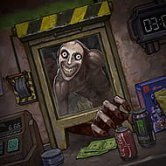
Lyrvane Park doesn’t ease you into its horror beats either. The welcome show, the ticket trap, and the first proper glimpse of the park’s resident threat are all candidates for your first jump scare, and which one gets you tends to depend entirely on how cautiously you’re exploring.
Reading the Radar of Emotions
The Radar of Emotions is the tool that turns Lyrvane Park from a straight horror walk into something closer to a scavenger hunt. You earn it from the crane machine in the Puzzle Zone after winning a Luna Coin off a color-memory challenge against a giant, very unfriendly monster eye — touch that eye directly and it’s an instant reset, no health bar involved. Once equipped, the radar wants you to stand almost completely still for a couple of seconds until it chimes, at which point glowing orbs appear nearby.
Here’s the part that catches people out: sprinting or jumping while collecting counts as interference, and the orbs you were chasing simply vanish. You have to walk. It feels counterintuitive in a game with a monster loose in the building, but the radar rewards patience over panic almost everywhere it’s used.
Emotion points open marked doors scattered around the park, including the backstage Staff Only area that most players don’t find until well into their second lap. Save-scummers take note: points earned this way are permanent currency rather than something you spend and lose, so there’s no real penalty for opening every door you can reach.
The Blue Monster and the Generator Chase
- Five generators need activating in sequence once the storage sector unlocks, and the order matters less than moving fast between them.
- The monster itself is a one-hit kill with no combat option, so the entire sequence is built around routing, not fighting.
- Green lights from an activated generator can briefly stun the monster if it’s already close, which is the closest thing this section has to a safety net.
This chase is where community opinion on Lyrvane Park splits hardest. Some players find it the tensest ten minutes in the whole game; others feel it leans a little too heavily on trial-and-error memorization once you know where the generators are. Both reactions show up constantly in comment sections, and honestly both are fair — the layout is generous once learned, punishing the first time through.
Collectibles, Mail, and What Lyrvane Park Doesn’t Tell You
Eleven gift boxes and five mail drops are hidden throughout the park, and there’s no UI tracker for either, which means players end up counting their inventory manually before committing to the ending. The mail in particular carries actual lore — small details about the park’s history that don’t come up anywhere else. Skipping it means finishing Lyrvane Park with a noticeably thinner picture of what actually happened here.
Three arcade machines total exist across the map, and clearing all of them with a score past 65 is tied to one of the game’s harder-to-notice achievements. Casual explorers often clear one or two without realizing a third is waiting somewhere in the plaza area they already walked past.
How do you paint the turnstile drawing correctly in Lyrvane Park?
Draw a sharp, vertical zigzag from top to bottom on the canvas next to the gate. Rounded shapes or unrelated drawings like hearts or smiley faces won’t register — the turnstile is specifically looking for a lightning bolt shape.
What does the Radar of Emotions actually let you do?
It reveals collectible emotion orbs that you can only gather by standing still to detect them and then walking, never sprinting, toward them. The points collected act as a permanent currency for opening specific marked doors around the park, including the backstage Staff Only area.
How long does it take to fully complete Lyrvane Park?
Most players finish a full run, achievements included, in a single evening — typically two to three hours once you know where the collectibles, arcade machines, and radar doors are.
Lyrvane Park earns its short runtime by never letting a single system overstay its welcome, whether that’s the radar’s patience test, the crane’s fussy claw grip, or the blink-and-you-missed-it window before the blue monster loops back through the storage sector. It’s a tight, deliberately paced haunted-park game that rewards players who slow down instead of sprinting for the exit.