














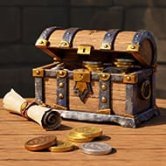
Coin Maker Simulator
 (1 оценок, среднее: 5.00 из 5)
 Loading...
Similar Games












Description
Coin Maker Simulator looks like a cozy crafting sim about hammering out shiny medieval currency — it plays like a prison sentence with a furnace in it. You’re a former royal treasury manager locked in the King’s dungeon, and the only path back to freedom runs through orders, favor, and a production line you have to build yourself.
| Genre | Casual, Simulation |
| Perspective | First-person |
| Mode | Single-player |
Locked in a Dungeon in Coin Maker Simulator
The setup is blunt by design. The King doesn’t explain himself beyond assigning daily orders, and the guard who runs the shop frames the whole arrangement as a worker proving himself to earn favor — nothing more. There’s no tutorial dressing this up as anything other than forced labor with good lighting.
What makes it work is how physical everything feels. Chopping, melting, and stamping all demand your attention in ways that a menu-driven crafting game would skip past entirely.
Firewood, the Furnace, and the Melt Timer
Chopping logs is a hold-to-swing action with a timing line — land the swing on the mark and the log splits, miss it and nothing happens. Different melts burn through different amounts of wood, so keeping a stack beside the furnace stops being optional once orders start piling up. Feeding a bar into the furnace and starting the timer lets you walk away and handle other tasks, which is the first real signal that this game wants you running a production line, not babysitting one station.
Tongs, Plates, and Why Bigger Sheets Matter
Pulling a finished bar out bare-handed isn’t an option — the tongs exist because hot metal stays hot, and the community has entire discussion threads built around exactly that friction. What comes out is a plate, and plate size directly determines how many blanks you’ll punch from a single melt. One popular forum thread, titled around merging melts for maximum plate size, is essentially players reverse-engineering how to cut down on furnace trips by consolidating metal before punching.
The Coin Punch and Templates
The coin punch is the tool the guard sells as essential, and he’s not wrong. A template loaded into the punch determines what shape gets cut; feed it a plate and blanks fly out, with a distance setting that controls how far short, medium, or long they shoot across your cell. A six-blank plate is standard, though players running larger sheets report pulling nine or eleven blanks from a single punch cycle.
Silver, the Quench, and Why It’s Worth the Extra Step
Not every metal behaves the same once it leaves the furnace. Coal-based metal needs a water quench before it can be worked into silver, meaning you’ll be hauling a bucket over and dunking hot metal before continuing the chain. The process takes longer than a straightforward copper melt, but silver orders pay enough to make the detour worthwhile once you’ve got the barrel set up to support it.
Stamping the Crown and Keeping Orders Clean
Every blank still needs the hand stamp before it counts as a finished coin — skip it and the order board will flag an unstamped piece sitting uselessly in your pile. The habit that actually keeps a session moving is punching a full batch, stamping that whole batch in one pass, then delivering and banking any surplus in your chest rather than trickling coins out one at a time.
King’s Favor and the Guard’s Shop
Coins and favor are tracked as two completely separate currencies. Coins come from completed orders and sit in your chest; favor is a reward earned for hitting order milestones, spent separately at the guard’s shop. The guard is upfront that prices escalate with every purchase, so grabbing everything the moment you can afford it isn’t actually the smart play.
Early purchases worth prioritizing include the coin punch itself, along with axe and tongs, since both unlock self-sufficient crafting rather than relying on starting gear. A second order board, letting you juggle two orders simultaneously, tends to be the single biggest throughput jump available once you’ve got the basics covered.
The Piggy Bank and the Supply Pallet
The piggy bank is a deposit option that gives every coin you feed it a chance to duplicate when eventually smashed open, turning spare coins into a small gamble rather than dead weight sitting in your chest. The supply pallet, meanwhile, is less flashy but arguably more useful day to day — it keeps materials stacked neatly in one place instead of scattered across your cell floor, which matters because a cluttered workspace actively interferes with completing orders cleanly.
What the Demo Holds Back for the Full Game
Several shop items, including parts of the silver tool line, are visibly locked behind an “available in full game” label in the current build. Chisels sit in a similar spot — stocked in the shop, never shown doing anything functional in the demo, which has left players speculating rather than confirming what they’ll eventually do. It’s a clear signal the dungeon economy in Coin Maker Simulator is going to expand considerably beyond what’s playable right now.
Why does silver take longer to process than copper does? Coal-based metal needs a water quench at the barrel before it can be worked, adding a step that copper skips entirely — the tradeoff being that silver orders pay noticeably more once that extra step is routine. What’s the fastest way to raise king’s favor early on? Completing orders is the only source, and since prices climb with every purchase, the common advice is front-loading the coin punch, axe, and tongs before spending on comfort items like extra tables or lighting. Is there a cap on how many coins you can carry? Hand capacity starts at ten and can be raised through gameplay progression, which matters once batches start outpacing how often you’re willing to walk to the chest.
From chopped firewood to a stamped coin landing on the order board, Coin Maker Simulator turns a grim premise into a surprisingly tactile production chain, and the King’s dungeon stops feeling like a punishment the moment your furnace, punch, and stamp are all running in sync.