














Click Clock
 (1 оценок, среднее: 5.00 из 5)
 Loading...
Similar Games







Description
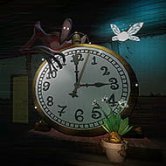
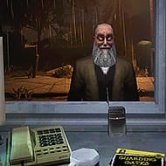
You click the clock and a single second drops into your hands, and the room seems to tick back at you as if it noticed. Click Clock turns that first click into a slow slide from a harmless idler into something stranger, where every second you collect has a price and the price is blood. The game is built around one object, one currency that keeps changing meaning, and a space you can explore between clicks.
| Genre | Incremental simulation with psychological horror elements |
| Perspective | First-person 3D |
| Mode | Single-player |
| Core resources | Time, blood, skulls |
| Progression | Time makers, blood sources, skull talents, Reincarnate |
| Platform | PC |
Time, Blood, and Skulls in Click Clock
Every run rests on three resources that depend on each other. Time is the base number, and you produce it by clicking the clock yourself. Early in the game that manual clicking feels like the whole point, but the design pushes you quickly toward letting machines do the work so your attention can go to the room around you.
Time makers are the first automation layer. Once one is unlocked it keeps producing time while you do something else, and each new one outpaces your hand. The classic beginner mistake is clicking furiously long after a time maker would have out-earned you.
Blood sources are where the mood shifts. The store tagline calls blood the currency time demands, and you spend it to boost your time makers. Players who expected a cozy idler tend to notice here that the numbers are not as innocent as they look.
Skulls arrive as you accumulate time, and they work on a separate track from blood. They are not spent on faster clicking; they feed the permanent skull talents that stay with you when you start again.
Ascend, Reincarnate, and the Prestige Loop
Progress is not a straight line. At some point the climb flattens, and the game offers two named steps instead: Ascend, which ignites your skull talents, and Reincarnate, which restarts you stronger than before. Idler fans will recognize this as the prestige loop, the trade of a short-term reset for a permanent boost that defines the genre, only here it is wrapped in skulls and rebirth rather than a plain menu button.
By the time you reincarnate for the first time, the opening minutes of a run feel different. Things that once took patient clicking now fall into place quickly, and the skull talents you unlocked start to feel like the real engine of the climb rather than a side bonus.
The loop is also where opinions split. Players who love watching big numbers climb are happy to repeat it, while those who came for the horror and the secrets sometimes find the resets slow, because the story and the grind compete for the same hours.
Clues, Secrets, and Multiple Endings
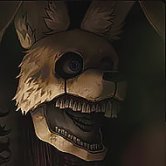
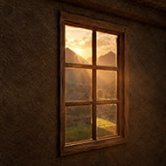
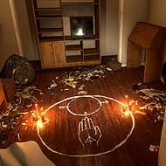
Between clicks you can explore your space and look for clues. That exploration is the other half of the game, and it separates it from a plain clicker: the room itself is a puzzle that explains, slowly, what the clock is and why it asks for blood. Once a few clues line up, the atmosphere stops being decoration and starts feeling like a trail.
The ticking is the detail that defines the mood. Horror fans get the most from this part, since the pressure comes from atmosphere and slow discovery rather than sudden scares.
There are multiple endings, so the mysteries you uncover are more than flavor. Explorers who like to chase every secret will want to treat each run as both a growth cycle and an investigation, because what you learn in one life can shape what you look for in the next.
Questions Players Ask Before Starting Click Clock
Is Click Clock an idle game or a horror game?
It is both. The core loop is incremental, built on time makers, blood sources, and numbers that climb on their own, but the atmosphere, the clues in your space, and the cost of blood push it firmly into psychological horror territory.
What do skulls do in Click Clock?
Skulls are earned as you accumulate time. They unlock permanent skull talents, which carry through Ascend and Reincarnate, so they are the main way one run keeps making the next run stronger.
Do I need to keep clicking once time makers are running?
You can still click the clock, but your time makers produce time without you, and blood boosts them further. The practical approach is to click while saving for the next unlock and spend the rest of your attention hunting for clues.
Click Clock works best when you treat the clock as both a machine and a question. Feed your time makers with blood, ignite another skull talent, and Reincarnate with a better sense of what the room was trying to tell you, because the strongest runs are the ones where the numbers and the clues move forward together.