








Chuck Nolemland
 (1 оценок, среднее: 5.00 из 5)
 Loading...
Similar Games






Description
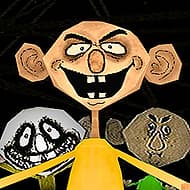
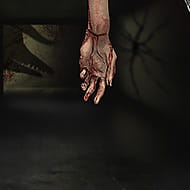
What happens when the hunger bar hits zero and you hear Chuck’s footsteps start moving toward you? That’s the moment Chuck Nolemland keeps building toward, over and over, in a loop that’s earned its reputation as one of the harder rage horror games in recent memory.
| Genre | Rage / Survival Horror |
| Platform | PC (Steam, itch.io) |
| Style | PSX-inspired retro 3D |
| Perspective | First-person |
Feeding the Starving Kid
The premise of Chuck Nolemland is simple to explain and considerably harder to survive: you’re stuck working for Chuck, and Chuck’s son is always hungry. Keeping the kid fed means constantly tracking down watermelons scattered around the game’s environments and getting them back before the hunger bar drains completely. Let it hit zero, and Chuck himself starts closing in, turning what was a scavenging task into a chase.
Community discussion around the game often circles back to the title itself — players noticed early on that “Nolemland” is “melon” spelled backward, which lines up neatly with the entire watermelon-feeding mechanic and has become something of an inside joke in the game’s comment sections.
New players consistently underestimate how quickly the hunger bar moves once the first area opens up, which is where most early attempts end.
Reading the Map Before Chuck Starts Moving
Chuck Nolemland rewards players who spend their first few attempts learning watermelon spawn locations rather than sprinting blindly through unfamiliar rooms. Because the hunger bar doesn’t pause while you’re exploring, wasted movement is the single biggest cause of early failed runs — players who die repeatedly in the same section are almost always burning time on paths that don’t lead anywhere useful.
Speedrunners who’ve pushed the game further describe a noticeable shift in mindset once the map becomes familiar: the challenge stops being about finding watermelons at all and becomes entirely about optimizing the fastest route between known spawn points, especially once Chuck himself enters the chase.
The Leaderboard and Competitive Side
A leaderboard feature was added to Chuck Nolemland after launch, giving players a direct way to compare performance against others rather than just personal bests. This shifted how a portion of the community approaches the game, with dedicated players now optimizing runs specifically for leaderboard placement instead of just trying to survive a single successful attempt.
Alongside the leaderboard, an update to the game’s visuals was released, refining the PSX-inspired look without abandoning the deliberately rough aesthetic that defines its atmosphere.
Endings and the Secret Mode
Chuck Nolemland doesn’t funnel every player toward one conclusion. Players discuss at least three distinct endings in community threads, with the third generally regarded as the most achievable and the first two requiring a much deeper understanding of the game’s map and hidden triggers. On top of the standard endings, a secret mode was added requiring players to discover a hidden path on their own, with no in-game hint pointing toward it directly.
Why Players Call It a Rage Game
The rage label isn’t just marketing language — it reflects a real difficulty spike once Chuck starts actively hunting rather than the hunger bar simply ticking down in the background. Once he’s on the move, mistakes compound quickly, and a single wrong turn in the wrong hallway can end a run that was otherwise going well.
What the PSX Style Adds
The retro visual choice isn’t just an aesthetic layer on top of Chuck Nolemland — it actively affects how the game plays. Limited draw distance and deliberately grainy textures mean players can’t always see Chuck approaching from a distance the way they could in a more modern-looking horror game, which raises the tension around every corner turned while the hunger bar is running low.
Players comparing Chuck Nolemland to other rage-focused indie horror games consistently point to this visual restriction as the reason it feels harder than titles with cleaner sightlines — you’re reacting to sound and instinct nearly as much as to what you can actually see on screen.
Frequently Asked Questions
- How do you unlock the secret mode in Chuck Nolemland? The secret mode requires finding a hidden path somewhere in the game’s environment on your own — there’s no explicit in-game hint pointing to its location, so most players find it through community discussion or repeated exploration.
- What happens when the hunger bar reaches zero? Once the bar empties, Chuck himself begins actively pursuing the player, shifting the game from scavenging for watermelons into a direct chase sequence.
- How many endings does Chuck Nolemland have? Players commonly reference at least three distinct endings, with the third generally considered the most straightforward to reach and the earlier ones requiring more thorough exploration of the map.
Between the hunger bar, Chuck’s footsteps closing in, and a secret mode most players only find by accident, Chuck Nolemland earns its reputation as one of the harder rage games built around a joke as simple as a reversed word for melon.