















Baito Fight!!: Part-time Devil Hunter
 (1 оценок, среднее: 5.00 из 5)
 Loading...
Similar Games











Description
In Baito Fight!!: Part-time Devil Hunter you start as Anansi, a former baseball player with a new apartment, an overdue rent bill and a building that is quietly filling up with devils. That setup matters because money and monsters arrive on the same schedule, and neither waits until you feel ready. The game turns an ordinary week of errands into a job, and the job happens to involve a bat.
A Landlord, a Bat and Overdue Rent in Baito Fight!!
The word baito is Japanese shorthand for a part-time job, and the title is not being modest. Anansi is not trying to save the world. He is trying to keep the landlord away, and the official descriptions describe a chaotically controlled life where meeting neighbors, earning cash and paying rent counts as just another day. Baito Fight!! asks whether heroism can be a side gig, and that single question colours every system that follows.
The answer turns out to be yes. The bills still do not care.
Players who enjoy slice-of-life stories will settle in at once, because the stakes are small but personal. Those who arrive expecting a grand hero’s journey should adjust their expectations early, since the drama here lives in hallways and doorways rather than in ruined kingdoms.
Devils in the Neighbors’ Apartments
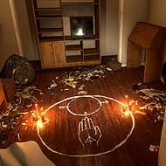
The devils are not waiting at the end of a dungeon. They are infesting apartments where people live, and Anansi uses his baseball skills to clear them out of his neighbors’ homes. That choice changes the geography of the whole experience: the world is one building plus the streets around it, so every door is a possible job and every neighbor a possible client.
Early in the game the building is a small place that is easy to learn, but by the time you know whose door leads where, the neighborhood starts to feel like a real map. Familiar corridors become the backbone of the daily loop.
Fights are described as bite-sized, which suits short sessions. A hunt can fit between errands, and players with limited time will appreciate that nothing demands a long commitment before it gives something back.
Stepping Up to the Plate: Defensive Batting Timing
Combat is turn-based, with attacks inspired by baseball. The twist arrives on the devils’ side of the exchange, where a real-time defensive batting mechanic lets Anansi sweep the hellish horde. Menu choices decide what you do, and your timing decides how much damage you take.
Beginners tend to treat the defence phase as a break between decisions, but it is where reflexes matter most. Learning when to swing is a skill separate from learning which move to pick, and it is the part players mention when they describe the game to friends.
The mix is divisive. Players who love pure turn-based strategy may feel interrupted by the timing section, while action-minded players enjoy having something to do on every turn. Both camps agree the baseball theme gives the fights more personality than a plain command menu would.
Convenience Store Runs and the Value of a Day
Money. Cash comes from hunting devils and goes into three places: convenience store runs, new powers for Anansi, and the overdue rent that started the story. Every purchase competes with the others, which gives even a small payday a decision attached.
Convenience store runs. The store is a part of daily life rather than a menu hidden in the corner. Treating it as a recurring cost makes Anansi feel like a person with a routine, not a fighter with an inventory.
Time. The world has days that always progress, and time only moves forward. That rule gives the calendar weight, because skipping a conversation or a hunt is a real choice, not something you can quietly undo later.
The Neighbors Who Move Forward in Time
Neighbors live in and around the building, and their lives move forward while you play. Learning the details of those lives opens new side quests and story lines with branching paths, so the relationships are not decoration. Completionists will want to check back in with people, because a neighbor’s situation may look different a few days later.
Because time always moves forward, a single pass cannot reveal everything. That structure rewards curiosity and gives replays a reason to exist, though players who dislike missing content may find the pressure uncomfortable.
Among the listed features is petting the cat, and the community treats it as a genuine highlight. It is a small, warm detail that shows what the game values between the fights.
Lovecraftian Undertones and Multiple Endings in Baito Fight!!
Community tags paint an unusual picture. Alongside relaxing, cute, hand-drawn and pixel graphics, the game also carries tags for Lovecraftian and psychological horror, plus alternate history and a 1990s feel. That contrast explains why the tone can shift from cosy routine to something stranger without warning.
A mystery sits behind the infestation in the neighborhood, and the multiple endings tag suggests the answer is not locked to one path. Players who like to read between the chores will find the story rewards attention.
The honest caveat is pacing. Idler and time management tags describe a game of repeating days, and some players will find the daily cycle slow while others call it exactly the point. Choosing which kind of player you are is the real entry requirement.
Baito Fight!!: Part-time Devil Hunter works best when you accept Anansi’s life as it comes: swing the bat when a devil appears, pay down the rent, visit the neighbors, make the convenience store run and pet the cat before the day ends.