














How To Fish
 (1 оценок, среднее: 5.00 из 5)
 Loading...
Similar Games











Description
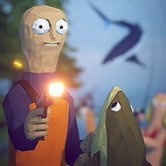
In How to Fish you start on the Lighthouse island with a health bar, a hunger bar, and no money, which matters more than it sounds. Up to three friends can wake up beside you, and nobody owns a weapon, a boat, or a plan. Everything the crew eventually becomes starts from that empty wallet.
| Genre | Physics-based co-op fishing |
| Players | Up to four |
| Starting point | The Lighthouse island, no money |
| Core loop | Catch, kill, sell, upgrade, repeat |
| Arsenal | Fishing rods, Shotgun, SMG, Assault Rifle and more |
The Lighthouse Island Money Loop
The shortest description of the game is catch, kill, sell, upgrade, repeat. Your rod works as a launcher more than a fishing tool: you hook a creature, fling it out of the water, and then finish it with whatever weapon you own. Launching fish with the rod sets up the multipliers that every later upgrade builds on, so skipping that step costs you real money. Early in the game the loop feels silly, and that is exactly the point.
At the Lighthouse, the first purchases are a rod, a radar, and a weapon, and doing all three quickly matters more than the order. The radar is a purchase the game never explains, yet experienced players insist on buying it early. Delaying these basics to hoard cash only slows the loop that produces more cash.
Staying alive is the other task on the island, since you carry a health bar and a hunger bar. Eating clams restores health, and cooked fish work as health supplies once you have a cooking setup, so food is part of your budget from the very first hour.
Money-minded players who love optimising numbers will adore this loop, and it is easy to explain to friends: whatever you can reliably sell is worth catching, and anything unusual deserves a quest check before it reaches the shop counter. Even the easy fish are worth hauling in while your income is tiny.
Shotgun First: What to Buy in How to Fish
Weapons beat cosmetic upgrades almost every time. The Shotgun costs around $150 and carries you through a large chunk of the game, so saving toward it is smarter than scattering money across the shop. Players keep repeating the same advice: a strong weapon matters more than a nicer rod, and the first boss fight is the reason why.
Mid-game firepower comes from the SMG at $650, which becomes available around the Desert Island and suits the Blue Shark and Pufferfish battles because of its rapid fire. Later the Assault Rifle takes over, and speedrunners talk about saving $20,000 for an AK before the Whale. Weapon damage upgrades get more expensive each time you buy one, so spreading cash thinly across every gun is a trap.
Boats are the second place where beginners overspend. The first engine upgrade costs $230 on the Forest Island, and the Dual Motors setup on a later island costs $860, yet the standard boat can still reach every location. Buy speed when travel genuinely drags, not before.
Rods and lures follow the island you are on. The Lighthouse works with the Crab Fishing Rod and basic or junk bait, the Forest with the Fishing Rod and early lure tiers, the Rocks with the Professional Lure, and the Volcano with the Scientific Lure. Check island, rod, lure, and bait before you assume a fishing spot is empty.
The Grill, Killscore and the Cooking Multiplier
The Grill is one of the biggest economic upgrades in the game. Once you own it, selling valuable raw fish is throwing money away, because cooking adds a multiplier that raw fish never get. Unlock it before you start dumping a good catch on the shop counter, and the whole economy suddenly feels more generous.
Killscore rewards stylish kills and stacks with the cooking multiplier. Launch a fish with your rod, finish it with a trick shot or a rare weapon, then cook it, and a single catch can be worth far more than a lazy one. Rare variants of creatures offer another route to bigger payouts, which is why scanning the water before reeling anything in pays off.
Cooked supplies turn the same kitchen into your healing plan. You can cook more than fish, and cooked fish double as health supplies, so the cheapest way to prepare for a boss is to carry food instead of buying healing. Bring a weapon, cooked fish, and the required boss bait, and you are ready to start the fight.
Boss Lures, Boss Trophies and the Giant Piranha
Bosses are not found by chance. You summon them with boss bait, and each one wants something specific: the Giant Piranha on the Forest Island needs a Modified Leech, one boss requires the Empty Beer Can lure, and a standard boss lure costs $280. Boss Lures are separate from ordinary lures and usually much more expensive, so budget for them the way you budget for a weapon.
The roster includes the Giant Piranha, the Pufferfish, the Blue Shark, the Tuna, the Albatross, and the Whale, with a final boss waiting at the end of the island chain. Healing matters during these fights, and lava clams are the usual answer near the last one. Upgrading your weapon before pushing ahead is cheaper than failing a fight and paying for bait twice.
Here is the part that trips people up, and players do argue about it: boss drops are not just loot. If you beat a boss and no new destination appears, check your inventory before assuming the game is broken, because the unique trophy may be the item you needed. Selling it too early is the most common mistake, and nothing in the game warns you loudly enough.
Players who like to hoard will feel vindicated here, since holding unusual drops until the local quests are checked is the safe default.
Four Fishermen, One Wallet in How to Fish
Co-op supports up to four players, and the group dynamic is half the appeal. Extra hands help with bosses, since more guns shorten every fight, but the same extra hands can gamble away the group’s money and shoot fish you were busy reeling in. Gambling with in-game currency is part of the design, so one friend with a bad streak can empty the shared wallet.
Talk about money before the first boss. Agree on who buys the Shotgun, who carries the boss bait, and who is allowed anywhere near the fish gambling. Groups that skip this conversation risk spending their first hour broke and blaming each other for it.
The chaos is also what makes the game funny. Physics-based fish flying across the island, rare variants appearing without warning, and weapons escalating from a starter rod to assault rifles create the kind of stories people retell for weeks. Whether you play with a regular crew or a few strangers, expect your friends to ruin at least one perfect catch.
Questions Players Ask About How to Fish
What should you buy first in How to Fish?
Start at the Lighthouse with a rod, a radar, and a weapon, then save toward the Shotgun at around $150. Delaying the weapon slows every later purchase, because killing efficiently is what raises the value of each catch. Boats and engines can wait until travel actually slows you down.
Why did no new island appear after a boss fight?
Most likely you sold the boss trophy. Boss drops can be required to finish quests and unlock the next island, so open your inventory and check local quests before selling anything unusual. Treat any unique-looking drop as a quest item until proven otherwise.
Is the Grill worth unlocking early?
Yes. The Grill gives you the cooking multiplier, which makes valuable raw fish worth far more once cooked, and cooked fish double as health supplies. Combine it with Killscore bonuses and trick shots, and your income stops being a slog through low-value catches.
How to Fish rewards crews who treat the Lighthouse island as a lesson in patience: save for the Shotgun, unlock the Grill, keep every boss trophy until the quests say otherwise, and let the Giant Piranha teach you why a Modified Leech matters. Bring friends, agree on who guards the wallet, and the fish will do the rest.