














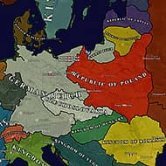
Pax Historia
 (1 оценок, среднее: 5.00 из 5)
 Loading...
Similar Games












Description
You pick a country, set the clock to a chosen moment in history, type a single sentence about what you want to happen, and the map redraws itself around your decision. That loop is the whole hook of Pax Historia, an alternate-history sandbox that runs inside a browser tab and answers every order with a response written on the spot. There is no hidden rulebook behind a row of buttons. The world reacts to the words you actually chose, which is why two sessions never feel quite the same.
Picking a Country and a Moment in Pax Historia
Every session begins with two choices: a nation and a date. Scenarios are sorted into four groups. Historical covers real dates, Alt-Historical covers what-if timelines, Historical Fiction covers dramatized stories, and Fantasy or Science-Fiction covers invented worlds with no tie to reality. Community presets fill each group, and the smartest way to start is with a familiar one, such as a Cold War snapshot. You already know what should happen next, so you can judge whether the AI is playing fair. This game rewards players who know their history, because a response that ignores geography or old alliances stands out immediately.
Beginners usually grab the biggest superpower on the map and then wonder why nothing feels tense. A major power can issue sweeping orders, but it also has the most to lose, and the AI treats overreach the way a real rival would. A smaller nation with one clear goal tends to produce better stories, such as a coastal state securing a trade route or a breakaway region fighting for recognition.
History enthusiasts get the most out of the Historical group, where every deviation from the record becomes a talking point. Writers and worldbuilders lean on the Fantasy or Science-Fiction group, where the setting is theirs to bend.
Actions and Diplomatic Chats: The Two Levers
The core mechanic fits in one sentence: you type an action or open a diplomatic chat, and the AI decides how every other country responds. Actions are blunt orders, like invading Greenland or moving a fleet. Diplomatic chats are direct conversations with other nations, where you can propose a trade pact, demand territory, or try to talk a neighbor out of a war. Between them, you shape both the map and the mood of the world.
- Actions change the situation on the map: troop movements, annexations, and policy shifts.
- Diplomatic chats change attitudes: offers, threats, and negotiations with a specific nation.
- The map updates after your moves, so you can see exactly what your wording caused.
Persuasion is the real skill here. A vague demand earns a vague reaction, while an argument that gives the other side something concrete often gets further. Players tend to describe the diplomacy as arguing your case rather than clicking a button, and victory depends heavily on how well you phrase things.
Once your first diplomatic chat with a rival opens, you notice that the pace is far slower than in a classic grand strategy title. There is no income counter and no tech tree to optimize. You write, wait, and read. Some players love that rhythm, while others find it thin without numbers to chase.
Why the AI Runs Everything in Pax Historia and Where It Slips
The AI is the engine of the whole sandbox. Roughly thirty different models sit behind the scenes, drawn from several major providers and from open-source projects, and you choose the quality level you want. Stronger models keep track of alliances, borders, and earlier decisions with more care. Weaker ones can contradict an earlier event or lose track of a treaty you signed many turns ago, which is the most common complaint among long-session players.
The project is still in alpha and uses a token-based model, so heavier models consume more of your allowance than lighter ones. Cost-conscious players often start a scenario on a lighter model and switch to a stronger one for important diplomatic chats. Nothing needs to be installed, since the sandbox lives entirely in the browser.
Here is the divisive part. Some players argue the AI is too accommodating and lets clever phrasing beat sound strategy. Others say that unpredictability is the entire point, because a scripted opponent would only bring back the rigid outcomes the sandbox was built to escape.
Building Scenarios That Hold Together
Custom maps, actors, and historical context are all editable, and finished scenarios can be published for the community. That is where the sandbox becomes a toolkit. The AI fills any gaps with guesses, so a scenario with a clear background paragraph about who rules where, and why, produces far fewer strange reactions than a sparse one.
Early in an Alt-Historical scenario, keep your actions small and specific so the AI has a pattern to follow. By the time a rival has answered three diplomatic chats, you have a baseline to push against, and larger moves feel earned instead of random. Copying a published preset and editing it is the fastest way to learn what a well-built scenario looks like.
Scenario builders get the most from this step, since every detail they write becomes a rule the AI has to respect. A good habit is to restate key facts, such as an existing treaty, inside your own action text so the model never forgets them.
Questions About Pax Historia From New Players
Does Pax Historia need a download?
No, it runs in a web browser. You open it, choose a scenario, and start typing actions or opening a diplomatic chat. That makes it easy to try on a laptop between other things.
How do you get another nation to cooperate in Pax Historia?
Offer something concrete inside a diplomatic chat instead of making a bare demand. Naming a trade pact, a shared enemy, or a border guarantee gives the AI a reason to agree. Reminding it of earlier agreements in the same chat also helps.
Can you build your own scenario in Pax Historia?
Yes. You can create or edit maps, actors, and historical context, then publish the result as a preset. Many players begin by copying an existing Alt-Historical scenario and changing one starting condition.
The strength of Pax Historia is that every diplomatic chat can go somewhere you did not plan, and that is also why careful scenario writing matters so much. Choose a modest nation, write a clear background, and keep your first few actions specific. Once the AI starts reacting in a way that surprises you, the Alt-Historical timeline you are building becomes a story you could not have scripted.