














EthnoGuessr
 (1 оценок, среднее: 5.00 из 5)
 Loading...
Similar Games












Description
What do you do when two averaged faces give you almost nothing to work with and the world map still demands a single pin? EthnoGuessr asks that question ten times in every daily set, and the rounds move faster than your doubt does. The game blends geography trivia with facial anthropology, so your instincts about maps matter as much as your eye for features.
| Genre | Geography and trivia |
| Platform | Browser |
| Players | Single player |
| Daily set | Ten ethnic groups per day |
| Modes | Classic, Countries, Genomes |
How a Round of EthnoGuessr Works
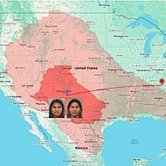
Each round shows two composite faces, one male and one female, built as averages for a single ethnic group from a public anthropological database. Your task is to place a pin on an interactive world map at the point where that group comes from historically. Once you commit, the group’s name and a short description appear, so every round doubles as a small lesson. Points are proportional to how close your pin lands to the primary map region.
A new daily set of ten groups appears every day.
The word historically carries more weight than newcomers expect. The prompt asks where a group originates, not where its members live today, so a pin dropped on a modern population center often loses points to a pin placed in the older homeland. Geography buffs usually adjust within the first few daily sets, once they stop answering with a present-day map in mind.
Classic, Countries and Genomes: Choosing a Mode in EthnoGuessr
Classic mode is the core loop and the one most players mean when they talk about the daily. You see the male and female composites for well-known groups, then guess their historical origin on the map. It rewards steady map knowledge and a feel for how neighboring groups differ, and it is the easiest place to start building a streak.
Countries mode is a variant built around modern countries rather than ethnic homelands. It changes the question you are answering, which means habits from Classic mode can mislead you if you carry them over without thinking. Trivia competitors who like switching rulesets will find it a good contrast.
Genomes mode is the newer addition, and it shows real photos instead of averaged composites. You guess an AncestryDNA-style regional breakdown, and visitors can submit their own results and a photo to appear for other players. Curious learners often find it the most personal of the three, since the faces belong to real people rather than statistical blends.
Reading Composites and Living With the Controversy
Composites smooth out individual quirks, so experienced players rely on overall structure rather than any single feature. Looking at the male and female faces together gives you two chances to catch a shared trait, and that pairing is often what breaks a tie between close groups. Community vocabulary leans on words like phenotype and composite, and players swap perfect scores from the daily the way crossword fans swap times.
Because scoring depends on distance, a pin placed toward the middle of a large plausible region protects your points better than a gamble on its edge. Neighboring groups whose composites look alike are where most points leak away, and hedging is the usual answer. Committing hard only makes sense when something in the faces genuinely rules the alternatives out.
Not everyone is comfortable with the premise, and that deserves a straight acknowledgment. Critics argue that averaged faces flatten the variation inside any group and that guessing origin from appearance can reinforce stereotypes, and the site is often linked to internet communities that debate race and genetics, which adds to the unease. Supporters answer that the game frames everything as educational and treats results as geography and anthropology trivia. Many players land in between, enjoying the map practice while treating the faces as rough averages rather than rules.
Questions About EthnoGuessr Scoring and Modes
- How is EthnoGuessr scored? Your score depends on how close your pin lands to the primary map region for the group shown. A pin near the historical homeland earns most of the points, while a pin on the wrong continent earns very little. Across a daily set of ten groups, consistent accuracy matters more than one lucky round.
- Does the map count where a group lives now? No, the round asks where the group originates historically, so the answer follows the older homeland rather than today’s population centers. Dropping a pin on a modern city usually costs points in Classic mode. Countries mode is the one that shifts attention toward present-day nations.
- What is Genomes mode? It shows real photos and asks you to guess an AncestryDNA-style regional breakdown instead of placing a single pin. Visitors can submit their own results and a photo to appear in it for other players. It tests a different skill than the composites in Classic mode.
EthnoGuessr rewards players who read the male and female composites together, respect the historical wording of the prompt, and hedge wisely when two groups blur. Whether you stick to the Classic mode daily set or branch into Genomes mode, each round leaves you with a name, a short lesson, and a slightly better map in your head. Just keep the debate around averaged faces in mind while you chase that perfect ten.