















LSD: Revamped
 (1 оценок, среднее: 5.00 из 5)
 Loading...
Similar Games










Description
In LSD: Revamped you start every dream with no goal, no score and no instructions, which matters because the dreamscape only responds to where you walk and what you bump into. Nothing tells you what to touch, and nothing stops a quiet field from turning into something strange a few steps later. The project is a fan-made remake of a cult-classic PlayStation exploration game, built around surreal places instead of challenges.
Wandering Without Objectives in LSD: Revamped
The first thing newcomers get wrong is looking for a task. There are no quests, no bosses and no win screen, only dreamscapes that you explore at your own pace. A dream lasts up to about ten minutes and then you wake and return to the menu, and falling off a cliff or into a hole wakes you at once.
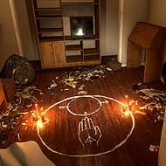
Movement matters less than contact. Bumping into walls, objects, people and animals warps you elsewhere, and touching people, animals or special objects tends to produce stranger dreams than touching a plain wall. Exploration fans will find that wandering with intent is less rewarding than wandering with curiosity.
Places do not look the same twice. Textures get swapped, random objects and roaming characters fill the scenes, and each finished dream counts as one day in the game. Early in a session this can feel random, but the variety is the whole point of the dream emulator idea.
Linking, the Grey Man and Flashback: Words Dream Walkers Use
Linking is the term for warping from one dream location to another. Players talk about linking constantly because it is the only real way to travel: you do not choose the route, you choose what to touch. A dream that links often feels dynamic, while one that stays in a single place feels calm.
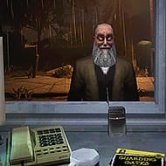
The Grey Man is the figure every veteran mentions. He can appear in some dreams, and touching him can cost you the Flashback option for that dream and undo progress you made. Newcomers tend to walk straight up to him out of curiosity, which is understandable and usually a mistake.
Flashback appears on the menu after a number of in-game days and lets you revisit an abbreviated version of a past dream. You can choose different paths there, though only for a few minutes. Completionists use it to chase the places they linked out of too fast the first time.
The Graph: Upper, Downer, Static and Dynamic
After each dream the graph appears and a flashing square marks where your last dream landed. The four directions describe the feel of the dream rather than a score.
- Upper: a dream that felt positive emotionally.
- Downer: a dream that felt negative emotionally.
- Static: a dream that changed very little.
- Dynamic: a dream that kept changing.
Where a dream lands on the graph influences where the next one begins. Community notes link some squares to starting spots such as the hotel, so the graph works as a loose map of your own habits. Filling the tiles over the eyes, nose and one tile below the nose triggers a run of short video clips, a detail that rewards patient players.
The graph is the closest thing to feedback the game offers. It never tells you that you did well, only what kind of dream you had, and that quiet honesty is part of its appeal.
What LSD: Revamped Keeps and What It Changes
The maker says the remake is about as accurate as it can get without a full decompilation of the original, and admits it is not identical. In his view it is close enough to evoke the same feelings, and he now considers the project complete. Veterans of the original will spot differences, but the mood of the dreams survives.
The rough edges are worth knowing. One commenter says the revamped controls feel far too sensitive and there is no sensitivity option, which is a fair complaint for a game built around slow wandering. Updates also made dream lengths truer to the original and added missing links, so the experience keeps shifting toward the source.
Extras round things out. Mod tools include a dream graph spawn editor, and a mod can bring the music of the original game into Revamped. The remake runs on Windows, macOS and Linux, so most players can try it without hunting for old hardware.
Questions About LSD: Revamped Before the First Dream
Is LSD: Revamped the same as the original?
No, and the maker says so. It aims to evoke the same feelings through Linking, the Graph and Flashback, but it is not an exact copy, and veterans may notice differences in dream lengths or links.
Is there anything to win?
There is no goal, ending or score to chase. The only structure comes from the Graph, which marks each dream as Upper, Downer, Static or Dynamic, and from the days that pass between dreams.
How do you unlock Flashback?
The Flashback option appears on the menu after a number of in-game days have passed. It replays an abbreviated version of a past dream, and meeting the Grey Man during a dream can cost you that option.
LSD: Revamped is best approached as a place to wander rather than a game to beat: link through a few dreams, watch the Graph mark each one as Upper or Downer, and see what the Grey Man does when you finally walk up to him. The Flashback option waits for patient players, and the hotel in the dream map is a reminder that every corner can change on the next visit. Nothing here has to be solved, and that is the whole point.