














Trauma lab
 (1 оценок, среднее: 5.00 из 5)
 Loading...
Similar Games












Description
You open Trauma Lab, pick a tool from the Weapons tab and fire a single shot at the test subject standing in the middle of the lab. The ragdoll staggers, the monitor in the corner starts to move, and you realize the damage is not a red flash but a path through skin, muscle, bone and organ. The sandbox is built for players aged 18 and up, and its first lesson is how much keeps happening after the hit lands.
| Genre | Anatomy and physics sandbox |
| Platforms | Browser, Windows, Android |
| Players | Single-player |
| Main modes | Sandbox, Keep Him Alive, Simple and Complex surgery |
| Content | Graphic gore, intended for players aged 18 and up |
| Status | In development |
How Trauma Lab Tracks a Bullet Through Skin, Muscle, Bone and Organs
The core idea fits in one sentence: every bullet is followed through four layers of tissue, one after another. A shot that clips the outer arm behaves nothing like a shot that meets the ribcage, and the simulation reacts to that difference instead of applying a flat damage number. Players who arrive from ragdoll sandboxes expect a pile of limbs, but a body with depth is what they get.
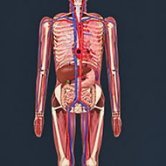
Early in a session the X-ray view is the most useful button on the screen. It reveals bones, organs and vessels, which turns every wound from a guess into something you can read. Fire, switch views, then fire again from a different angle and compare the two paths.
The ragdoll physics add unpredictability on top of the anatomy, because a body that falls differently exposes a different region to the next shot. Sandbox tinkerers will lose an hour repeating tests for exactly this reason. For a physics game, patience beats aim, since running the same experiment twice is the only way to see why two nearly identical shots ended differently.
Heart Rate, Blood Pressure, Oxygen and Blood Volume on the Monitor
The monitor is where the simulation speaks plainly. Four readings stay in view while you work, and watching them is often more informative than watching the body, because blood loss does not stop the moment the impact does. A wound that looks small can keep pulling a reading down while you are busy looking somewhere else.
- Heart rate shows how hard the body is working to keep up after an injury.
- Blood pressure tells you whether circulation is holding or starting to fail.
- Oxygen reflects whether the body is still being supplied with what it needs.
- Blood volume is the running total of what remains, and it drops with every wound that keeps bleeding.
The first time a reading falls out of range you will want to act, and that is where the Medicine tab comes in. Reading the monitor before you reach for anything is the difference between treating a cause and chasing a number. Students have mentioned that the setup helped them recall material from class, although the anatomy and treatment systems are fictional gameplay and not medical advice.
The vitals also make the sandbox honest about time. Nothing resolves in a single frame, so a patient who looks stable right after the shot may look very different a few moments later if nobody intervenes. That slow drift is the closest the simulation gets to tension.
Hand, Weapons, Props, Medicine and Powers: Picking Tools in Trauma Lab
Five categories organize everything you can use on the test subject. Hand covers direct contact with the body, Weapons covers the projectile tests, Props drops physical objects into the scene, Medicine handles treatment, and Powers rounds out the list for pushing the physics past anything a clinic would show.
A first session goes better with a plan. Newcomers say the menu is a little stressful to navigate at first, so the order below keeps you from opening everything at once.
- Open Sandbox and leave surgery on Simple.
- Switch on X-ray before firing anything.
- Test one tool from Hand and one from Weapons while watching the monitor.
- Apply a Medicine tool to the same wound and compare the readings.
- Drop something from Props onto the scene, then try Powers last.
Once the routine feels natural, mix categories on purpose. Fire from Weapons, treat with Medicine, then add a prop to the same area and watch whether the readings react. Each combination gives the physics a new question to answer, and that is what keeps the sandbox going long after the plan above is finished.
Simple Surgery or Complex Surgery: Scalpel, Saw, Clamps and Sutures
Surgery comes in two settings. Simple surgery finishes the individual steps for you, so a tap performs the action and the procedure moves along. Complex surgery hands you the scalpel, the saw, the clamps and the sutures and expects you to use each one yourself.
Start with Simple. The tool hints are easiest to learn there, and you can decide afterward whether the extra interaction appeals to you. Once Complex surgery asks you to pick up the saw yourself, the pace slows noticeably, and that slowness is the point for anyone who enjoys procedural detail.
Neither setting is a test of speed. Simple suits fast experiments and keeps attention on the next shot, while Complex turns the operation itself into the main attraction. The split lets both approaches share one sandbox without forcing either to adapt.
Keep Him Alive and the Ten Emergencies Where Only Medicine Works
Sandbox mode asks nothing of you, and Keep Him Alive is the answer to that. It sets ten emergencies in front of you and restricts you to medicine, which turns the tab you have been ignoring into your only option. By the time you reach Keep Him Alive, the monitor stops being decoration and becomes the whole job.
The loop is easy to describe and hard to do well. You read heart rate, blood pressure, oxygen and blood volume, decide what the patient needs, and apply Medicine before a reading collapses. Challenge-minded players will find this is the closest thing to a goal in the whole package.
Mistakes here tend to be about order: which reading to treat first, and whether to wait for a number to recover by itself. The monitor gives you the evidence, but the decision stays with you, and that is what makes the emergencies feel different from the open sandbox.
What Divides Players: Gore, Missing Goals and AI Disclosure
The first divider is content. The sandbox shows graphic injuries and includes a gore setting, and it is aimed at adults. Anyone who wants medical themes kept clean will bounce quickly, and that is a fair reaction.
The second is structure. Outside Keep Him Alive there is no visible upgrade or scoring loop, so the sandbox depends on your own curiosity to keep going. Some commenters ask for custom options in Sandbox and more patient types, and others are waiting to see what a story mode would add. The project is still in development, so that wish list is open.
The third is how the project was made. The page discloses AI assistance in code, graphics and sounds, and players weigh that differently. It is worth knowing before you start, and it does not change what the simulation actually does once the shot is fired.
Questions Players Ask Before Opening Trauma Lab
What is the difference between Simple and Complex surgery?
Simple surgery completes the steps for you, so you tap and the procedure advances. Complex surgery makes you use the scalpel, saw, clamps and sutures yourself, which is slower and more hands-on. Most players learn the tool hints in Simple first.
How do you win Keep Him Alive?
You work through ten emergencies using only Medicine, so weapons and props are off the table. Read heart rate, blood pressure, oxygen and blood volume first, then treat whichever reading is falling fastest before it collapses.
Does Trauma Lab teach real medicine?
The anatomy and treatment systems are fictional gameplay, not medical advice. The X-ray layers and monitor readings can still help you recall class material about tissue, circulation and oxygen, which some students say they noticed. For real clinical knowledge, a textbook or a course is the right tool.
Trauma Lab rewards the player who treats it as a lab rather than a challenge: fire one shot, switch on X-ray, read the monitor, then try Medicine on the same wound before moving on to Keep Him Alive. Players who need a goal will find the ten emergencies waiting, while everyone else can stay in the sandbox and test Hand, Weapons, Props and Powers until the physics stops surprising them. The test subject takes whatever you give it, and the monitor tells the truth about what you did.