














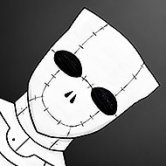
Sticker Skin
 (1 оценок, среднее: 5.00 из 5)
 Loading...
Similar Games










Description
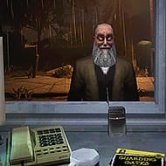
You wake up in a sauna with the restraints already tight, and Skinner is cheerfully announcing that all that is left is to fetch some wood. Sticker Skin opens on that moment and keeps you inside the room, because the horror comes from conversation rather than escape routes. It is a short visual novel where the only tool you hold is whatever you decide to say next.
| Genre | Horror visual novel with dark comedy |
| Setting | A sauna controlled by Skinner |
| Play Style | Single-player, response-driven story |
| Endings | Multiple |
| Platforms | PC |
Inside the Sauna: What Sticker Skin Asks You to Do
This is a visual novel, so there is no combat, no inventory and no health bar. Everything runs through written dialogue, art, music and a series of responses you pick, with small animations that keep the screen restless between lines. Because the whole game stays in one claustrophobic space, every change in the room carries weight, and that limitation is the strongest thing it does.
Early in the game Skinner treats you like a project rather than a person. He checks the restraints, talks through the process in a calm voice and mentions fetching wood, which leaves you alone with the wall and your own reactions. The tone is where it gets slippery, since the game carries both horror and comedy tags and the dialogue often sits somewhere between the two.
Survival here depends on what you say, not what you can do.
Wall Stickers and Skinner’s Reactions in Sticker Skin
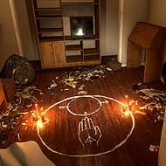
Responses: Every answer you give feeds back into the scene. Players point out that Skinner reacts to what you say, and the stickers on the wall change to match, so the room works as a running commentary on your choices.
Wall stickers: They act as the game’s visual memory. Watching them shift is the quickest way to confirm that a response mattered, which suits anyone who likes comparing small differences between runs.
Victims: The story pitch talks about victims in the plural, and the credits single out Victim 3 by name. Do not assume the person in the restraints is always the same captive. That detail is worth keeping in mind on a second run.
Chasing Endings: Where Sticker Skin Players Get Stuck
The Multiple Endings tag is the first thing players run into, and the comments show the friction. One player kept getting stuck on the first ending, another asked how to reach a different one, and a third asked whether escape is possible at all. The creators replied that an ending guide would arrive in a devlog, and a later comment says all the endings can now be tried.
Until you have a guide, treat each run as an experiment. Change one type of response, watch whether Skinner and the wall stickers react differently, and write down what you picked. Ending hunters will find the game rewards that kind of notebook discipline, while anyone who plays blind, as one commenter did, will probably stall at the first ending before the pattern becomes clear.
This is also where opinions split. Some players enjoy that the game refuses to explain itself, and others wish for a clearer signal about which choices matter. Whether escape exists is not something the game hands over cheaply, so the honest answer is to keep varying your responses and see what the room does.
Dark Comedy and Where Sticker Skin Divides Players
Reactions in the comments range from amused to disturbed. One player called it weird and loved it, another said they were disturbed, and one admitted they might admire Skinner rather than try to escape. That spread fits a game built on the gap between a friendly voice and a grim situation.
It also helps to know the scope. The game was made in about a month for a Halloween-season visual novel jam, so expect confident art, music and interface work in a compact package. A commenter asked whether it is a demo, and its page lists it as a released game, though several players say they hope to see it grow.
Be aware of the premise before you start: the creators describe it as being kidnapped and harvested for your skin. Players sensitive to captivity or body horror should weigh that, while fans of short, bleakly funny horror with replay value will probably be comfortable.
Sticker Skin is built around a small set of details: Skinner’s calm voice, the wall stickers that rearrange themselves around your answers, and the process that is always one step away from starting. Treat the first ending as a beginning, replay with different responses, and see how far the sauna lets you go.