














Project SEVER
 (1 оценок, среднее: 5.00 из 5)
 Loading...
Similar Games











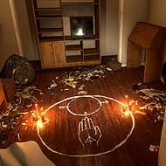
Description
What would you do if a short, well-paid contract beyond the Arctic Circle left you steering an aging Soviet submarine through the ruins of a research complex? Project SEVER answers by making you the mechanic and the pilot at once. The result sits somewhere between a hands-on submarine simulator and a slow, cold horror story, and it asks for patience before it asks for courage.
| Genre | Submarine simulation with adventure and horror elements |
| Perspective | First-person |
| Vessel | The Sever-3 submarine |
| Location | The Zone, a ruined underwater research complex |
| Mode | Single-player, with VR support |
A Replacement Mechanic on the Wrong Mission
You were hired as a ship’s mechanic for the carrier vessel of a research submarine, a simple job with generous pay. Then you filled in for a sick mechanic on the submarine crew during one mission, and everything went wrong. The submarine is called Sever-3, also written as North-3, and it becomes your only shelter once the mission collapses.
Nobody planned for you to be at the controls.
That reluctant-hero angle shapes how the game feels. You are not an elite operator who already knows every switch, you are a mechanic who learns the machine because there is no other option. Players who love story-driven exploration will appreciate how the setup explains why you keep poking at panels, terminals and gauges instead of simply flying away.
Navigator, Sonar, Drone and the Overheating Reactor in Project SEVER
Three instruments carry most of the work. The holographic navigator keeps you from getting lost in the labyrinths of the Zone, the sonar lets you perceive your surroundings, and the underwater drone handles anything outside the hull. A noise detector with a distance filter adds another way to read the dark before you commit to moving.
The onboard nuclear reactor is the part that punishes careless players. It is prone to overheating, and the game tells you outright to monitor energy consumption. Beginners tend to leave every system running, so the logical habit is to switch off what you do not need and watch the reactor, not just the map.
Repairs matter too, and a welding gun is part of that toolkit. When the terminal warns of a holographic navigator failure, you are suddenly in a maze without a map, which is the kind of moment simulation fans remember. The submarine is meant to feel like an ally rather than an obstacle, and learning its basics takes just a few minutes. VR players get the extra immersion of reaching for the controls themselves.
Inside the Zone: Drones, Turrets and Creatures of the Incident
The Zone is a colossal research complex built in the underwater depths and abandoned decades ago after an unknown catastrophe. Its local inhabitants include autonomous drones and submarines, heavily armed security turrets, and gross creatures of the Incident. Nothing there is friendly, and the ruins act as a trap built from old Soviet infrastructure.
The submarine’s searchlight picks creatures out of the black water, but using it also means choosing what you reveal. Stealth is a listed tag, so listening on the sonar before moving is usually smarter than charging through a corridor. Players who enjoy careful, quiet play will get far more out of the Zone than players who want constant combat.
Underneath the danger sits a mystery. Exploring the Zone is how you piece together what happened, and the game carries a multiple endings tag, so your route out may not be the only one. The immersive sim label fits, since reactor, repairs, drones and threats all push against each other at the same time.
What the Project SEVER Demo Covers and Where the Seams Show
The demo includes the first chapter and takes roughly two to three hours to finish. That is long enough to learn the navigator, test the sonar, survive a few reactor scares and see whether the pace suits you. It also gives early players a clear sense of how the full game wants to be played.
There is an honest caveat. The full game is still in development, and an older demo remains available from the menu with some mechanics that the newer one does not include. Players who prefer constant action may also find the maintenance rhythm slow, since a lot of the tension comes from tending machinery under pressure.
Even so, the demo is the most reliable way to judge whether you enjoy that kind of tension. If you do, the reactor alarms and the hum of the sonar are exactly what the game is built around.
Questions Players Ask About Project SEVER
- How long is the Project SEVER demo? The demo covers the first chapter and takes roughly two to three hours. In that time you learn the holographic navigator, the sonar and the underwater drone, and you meet the reactor overheating problem for the first time.
- Can you play in VR? Yes, VR is supported alongside regular play. The cockpit instruments, the sonar and the drone controls are exactly the kind of interactive panels that benefit from reaching out with your own hands.
- How do you stop the reactor from overheating? The game’s own advice is to watch energy consumption, since the onboard nuclear reactor overheats under heavy load. Shut down systems you are not using, keep an eye on the reactor readout whenever the sonar or drone is active, and repair damaged equipment before it forces a bad moment.
Project SEVER is at its best when you stop treating Sever-3 as a vehicle and start treating it as a machine that needs constant care. The reactor, the sonar and the holographic navigator are all small responsibilities that add up to big tension, and every ruined corridor of the Zone makes that tension feel earned. If you want a submarine adventure where maintenance is the scare, this game delivers it.