














One More Flight
 (1 оценок, среднее: 5.00 из 5)
 Loading...
Similar Games









Description
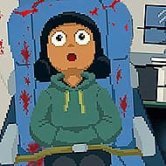
One More Flight looks like a cute pixel-art adventure but plays like a puzzle where every row of seats is a trap. The colors are bright and the cabin is tiny, yet the loop begins the same way every time: the engines hum, the service cart rolls down the aisle, and the plane goes down. Then you start again with nothing but what you remember.
| Genre | 2D pixel-art psychological horror |
| Setting | A doomed flight trapped in a time loop |
| Core idea | Nothing carries over between deaths except what you learn |
| Endings | Multiple, shaped by your choices |
| Tone | Dark comedy mixed with gore |
Reading the Cabin and the Service Cart in One More Flight
The game is built on observation, timing, and cumulative knowledge, and it is strict about the last one. You cannot carry items or character stats from one crash to the next, so the only upgrade is your own memory of the cabin. Early in the game that means walking the aisle slowly, studying the passengers, and noticing which compartments look wrong.
The service cart’s trip down the aisle is the first clock you learn to read. Because the loop resets the moment the plane goes down, every attempt becomes an experiment: change one thing, watch the fatal chain of events that follows, and remember it. Players who love tidy puzzle logic will feel at home, since those chains are the puzzles.
A single attempt follows a rhythm:
- The engines hum and you look around the cabin.
- The service cart rolls down the aisle.
- You test a passenger, a compartment, or a chain of events.
- The plane goes down and the loop restarts.
Some moments demand speed instead of patience. The game mixes slow investigation with sections where you race the clock or need a steady hand, and a split second of hesitation can undo an attempt.
Passengers Who Will Not Believe You
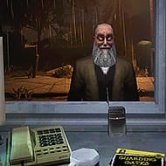
Saving passengers is the stated goal, and the game is blunt about how hard that is. They will not listen to what you say and will not understand what they see, and you do not even know why you are alone on the plane. Talking to them still matters, because each passenger helps you work out how the crash unfolds.
Players who enjoy choice-driven stories get the most from this part, since the game is tagged for multiple endings and a nonlinear structure. Every decision can send the flight toward a different outcome, and each death works as a record of what you tried. That is why failing here feels like progress rather than a setback.
The honest cost is repetition. If you dislike trial and error, the early crashes will test your patience, and because nobody believes you, persuasion never replaces finding the right action.
The Cargo Hold and the Dark Comedy Side of One More Flight
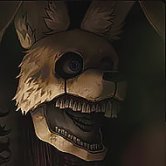
Something is alive in the cargo hold, and the game wants you to know it early. Not every danger is obvious, and some are so bizarre your mind refuses to accept them, which is where the psychological horror comes in. The feeling of being watched is part of the design, because no aisle or corner on the plane is fully safe.
The tone is stranger than the cover suggests. Colorful pixel art and a cute look sit beside dark comedy, gore, and violent deaths, so anyone expecting a gentle puzzle adventure should know the crashes are not gentle.
- Passengers: watch how each one behaves and reacts
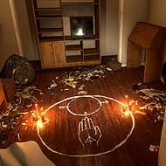
- Compartments: every one of them hides something
- Cargo hold: the place where the strangest danger lives
Scanning those three things every loop is the habit that separates a lucky attempt from a deliberate one.
Endings, Deaths, and What Players Debate
Does anything carry over between loops? No items and no stats do, only your knowledge of the cabin and the passengers. That rule is the heart of the game, and it is why a long-time puzzle player and a horror fan can both feel the same pull to try one more flight.
Can you save everyone? The goal is worded as saving as many passengers as you can while stopping the crash for good, which points to outcomes that vary instead of a single win state. The game promises multiple endings but does not state a fixed count, so treat any exact number with caution.
Demo death-and-ending compilations are already popular with viewers, which shows how much of the appeal is watching things go wrong in new ways. Others find that watching each failure drains the surprise, so the best approach is to play your own loops first.
One More Flight turns a single doomed trip into a notebook of small discoveries: the service cart, the cargo hold, a passenger who will not listen, and the crash that resets everything. Each death costs you nothing but time, and each loop sends you back to the aisle a little better informed.