















Tidy Up the Town
 (1 оценок, среднее: 5.00 из 5)
 Loading...
Similar Games










Description
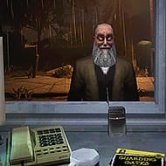
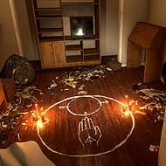
You try one last spell in the town square and every piece of stock from every market stall ends up scattered across the ground. Swords from the Blacksmith lie next to bottles from the Apothecary, scrolls from the Scribe and cuts from the Butcher, all mixed into one enormous pile before the merchants start their working day. Tidy Up the Town begins right there, and the only goal is to get every item back where it belongs.
| Genre | Cozy tidy-up simulation |
| Perspective | First-person |
| Players | Single-player |
| Market stalls | 10 |
| Items to sort | Around 1,000 |
| Controls | Full controller support |
Magic Sorting at the Heart of Tidy Up the Town
You play an apprentice-level sorcerer, and your magic is the tool that gathers scattered items and sends them back to the correct stalls and shelves. The game is played in first person and uses physics, so objects tumble, bounce and pile up the way a heap of dropped goods should. Most of the work is reading a messy square and deciding which cluster to clear next, which makes the loop feel closer to a relaxed puzzle than a chore list.
One quality-of-life detail shapes the whole rhythm: you do not need to hold the right item to shelve it. When you click a shelf, the matching item is selected for you automatically. That removes the fumbling with hands and inventory that slows down many tidy-up games, so your attention stays on where things belong.
Cozy players tend to appreciate this kind of friction removal more than any single spell. Sorting becomes a steady flow of look, click and shelve.
Ten Market Stalls and Roughly 1,000 Items
The market is split into 10 stalls, and the Blacksmith, Apothecary, Scribe and Butcher are the ones the game names most openly. Each stall has its own shelves, so learning which goods belong where is the real learning curve. The aim is roughly 1,000 distinct objects rather than a few dozen repeated endlessly.
- Blacksmith: swords and the other metal goods you would expect at a forge
- Apothecary: the bottles, remedies and ingredients of a potion seller
- Scribe: writing supplies and paper goods
- Butcher: the stock of the meat counter
That item count is a deliberate choice and also the most debated one. Players used to tidy-up games with ten times as many objects may find the total short, and the lower price reflects that. In exchange, you are not sorting the fiftieth copy of the same sword by hour two.
Treat the first stall you finish as a map of how the rest work. After that, the shelves start to feel familiar.
What Newcomers Get Wrong in the Town Square
The most common instinct is to rush, because messy piles and a looming workday suggest urgency. The game removes that pressure entirely, with no time limits and no game over state, so racing through the first pile gains you nothing except a rough idea of the stalls. Early in the game the smarter move is to slow down and notice which stall each cluster belongs to.
Another trap is ignoring your own abilities. Spells and abilities unlock to speed up sorting, and once they arrive the way you clear a pile changes. Players who stay with their starting methods for too long end up doing by hand what magic could do with far less effort.
Treat the opening stretch as practice, not a test. The leaderboards can wait.
Upgrades, Spells and the Leaderboard Chase
Power-ups and magical upgrades are the progression spine. Each improvement is really a time saver for the next stall, and once your upgrades stack up, the gap between a fresh sorcerer and a well-equipped one is the gap between a slow tidy and a smooth sweep.
Leaderboards add a second layer for people who like numbers. Speedrunners can compare times with friends and the wider community, while everyone else can ignore them, since they are optional. Completionists get their own target from the collectathon side of the game: finding every item and every secret.
This is the quiet strength of the design. You choose whether the market is a race or a stroll.
Cat and Dog Companions, Secrets and Comfort Options
You can obtain animal companions, both a cat and a dog, and their breeds can be customized. They are the cozy side of the game at its clearest, keeping you company while the square slowly empties. A town coming back to life is a fitting reward for a cleanup.
Beyond the shelves, the world is built with secrets and small touches of life to discover, so wandering away from the main piles has real value. Hidden-object fans will find the exploring side a natural fit, while players who prefer strict order can ignore it and simply fill shelves.
Comfort options matter in a first-person game with physics. Full key rebinding, head-bob and motion sickness toggles and field of view settings are all included, and controller support means you can play from a couch. Motion-sensitive players benefit most from these toggles.
Questions Players Ask About Tidy Up the Town
Does Tidy Up the Town have a time limit?
No. There are no time limits and no game over state, so you can tidy at your own pace. The only timing that matters is the optional leaderboard chase.
How many items and stalls are there?
Around 1,000 items spread across 10 market stalls, including the Blacksmith, Apothecary, Scribe and Butcher. The count is intentionally smaller than other tidy-up games so that no stall feels like filler.
Can you play with a controller and adjust motion settings?
Yes. Full controller support is included, along with key rebinding, head-bob and motion sickness toggles, and field of view settings. Because the matching item is selected automatically when you click a shelf, you never have to juggle what you are holding.
Tidy Up the Town is best treated as a game you dip into rather than a marathon: clear the Blacksmith’s swords, restock the Apothecary and Scribe shelves, let your cat or dog trail along behind you, and decide for yourself whether to chase leaderboard times. The roughly 1,000 items are enough to reward curiosity without turning into a slog, and the spells you unlock keep the sorting feeling like magic instead of labor. That balance is what makes the market square worth returning to.