














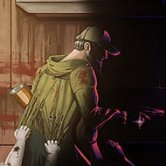
Iron Blight
 (1 оценок, среднее: 5.00 из 5)
 Loading...
Similar Games









Description
A gunshot in Iron Blight is not just damage dealt to whatever you hit. The sound can pull more horrors toward your position, which turns every trigger pull into a small negotiation with the street you are standing in. That one detail explains why this first-person survival horror feels so tense: you are a stranded husband in a cold, rainy Eastern Bloc town, and everything you do has a cost.
| Genre | Survival horror |
| Platform | PC |
| Perspective | First person |
| Setting | A rainy Eastern Bloc town overrun by mutants |
| Typical Length | Around 3 to 5 hours, according to player reports |
| Difficulty | Several difficulty levels, including an Ironman mode |
Locked in a Room: How Iron Blight Opens
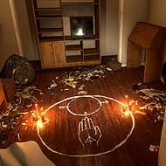
The opening is deliberately small. You find yourself trapped in a room while abominations claw at the door, a radio crackles with static, and the message that finally comes through is blunt: nobody is coming. From that moment the goal is simple, survive the feverish night and find your wife, Valeria. Players often point out how much that plain goal helps, since it leaves the atmosphere to do the heavy lifting.
What stands out in the first hour is how little the screen tells you. The interface is sparse, so you pay more attention to sound and your surroundings than to numbers on a HUD. Early in the game that feels almost uncomfortable, and horror purists tend to love it for exactly that reason.
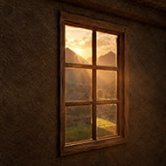
The look is stylized after early 3D horror, with chunky retro visuals that suit the decaying streets and the claustrophobic interiors. Rain, empty roads and dark doorways do more work than any jump scare, and the town itself becomes the first thing you learn to fear.
Every Bullet Counts: Weapons, Noise and Upgrades
Your early finds are a TT pistol, a double-barreled shotgun and a Mosin-Nagant rifle, and most mutants go down after a couple of pistol shots. That sounds generous until you notice how few bullets the town hands out. Ammo is scarce on purpose, and wasting it on something you could have walked around is the classic beginner mistake.
Noise is the second problem. Because gunfire can attract more horrors, a clean kill can still leave you worse off than avoiding the fight entirely. A sensible split is to treat the shotgun as a panic button, the pistol as a precision tool, and the Mosin-Nagant as the weapon for moments when you have time to breathe and line up a shot.
Upgrading weapons produces noticeable improvements, so a few well-chosen upgrades often matter more than a pile of loose ammo. Resident Evil veterans will recognize the instinct to invest in one reliable weapon rather than spreading resources thin.
Scavenging, Locked Doors and Reading a Street Before You Enter It
Survival here is about more than firepower. You manage food and medical supplies, scavenge tools to get past obstacles, and treat even an ordinary locked door as a small puzzle. By the time you move from the open streets into tighter interiors, hesitation costs more than boldness, because a dead end with a mutant behind you is the fastest way to lose a run.
A habit that pays off in nearly every new area:
- Stop at the edge of the area and listen before stepping in.
- Check corners and doorways for movement before you commit.
- Decide whether the fight is worth the noise or whether you can slip past.
- Grab only what you need, then leave before the area turns on you.
The fight, flee or die choice that the game keeps offering is a decision you make again and again. The players who last longest are usually the ones who flee more often than they expect to.
Retro Visuals, Modern Rules: Why Players Name Resident Evil and Silent Hill
Reviews and player comments keep comparing Iron Blight to Resident Evil, Silent Hill and Cry of Fear. The familiar foundation is all there: limited resources, tense exploration and a handful of puzzles standing between you and the next street. What makes it feel distinct is the way retro visuals sit on top of modern handling and a stripped-back screen.
Handling is slightly more demanding than in older games, with less information on screen, and that keeps familiar mechanics from feeling stale. You are never quite sure how much margin you have, which is exactly the point.
Some fans love that it invents nothing new and simply executes known ideas with confidence. Others wish it surprised them more. That split is one of the more honest debates around the game, and both camps usually agree that the mood is the strongest part.
Where Iron Blight Divides Players
Length is the most common complaint. Many reviewers put a full run at around 3 to 5 hours, roughly one or two evenings, and some feel that is too short even when they loved every minute. Fans of compact horror call it a strength, since there is no padding between the scares.
Bugs are the second talking point. Some players report problems that interrupt play, which is worth keeping in mind before you commit to an Ironman run. The game offers several difficulty levels and customizable settings, so relaxed horror fans can dial things down and enjoy the mood, while purists who want methodical exploration and one-life tension have a mode built for them.
Even with the short runtime and the occasional glitch, praise for the sound design and atmosphere is close to universal. The creaks, the rain and the distant scraping behind a door are what players remember afterwards.
Questions Players Ask Before Their First Night
How long does Iron Blight take to finish?
Most players report somewhere between 3 and 5 hours for a full run. A careful first playthrough on a higher difficulty, or an Ironman attempt after a death, can stretch that, but the story itself is compact.
Which weapons do you find first?
The early finds are a TT pistol, a double-barreled shotgun and a Mosin-Nagant rifle. Save the shotgun for emergencies, because gunfire can draw more mutants toward you.
Can you change the difficulty?
Yes, the game offers a range of difficulty levels and customizable settings, plus an Ironman mode for players who want every mistake to count. Newcomers to survival horror can lower the pressure without losing the atmosphere.
Iron Blight is at its best when you stop trying to win fights and start choosing them. Find Valeria by saving the shotgun, trusting the TT pistol for the quick kills, and letting the Mosin-Nagant handle the moments when patience beats panic. Keep listening, keep counting your shots, and the rainy streets become easier to survive than they first appear.