















COST OF TRUST
 (1 оценок, среднее: 5.00 из 5)
 Loading...
Similar Games








Description
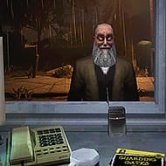
Can you trust a face that mimics every human emotion? That is the question COST OF TRUST puts in front of you from the first minute, with reinforced glass between you and a queue of desperate voices begging for shelter. You run a lonely checkpoint terminal, and your only job is to decide who gets into the safe zone. The catch is that some of the people outside are not people at all.
| Genre | Job-horror simulation |
| Mode | Single-player, first-person |
| Session length | About 10 to 20 minutes per playthrough |
| Core action | Allow or Reject each visitor |
Running the Checkpoint Terminal in COST OF TRUST
Everything happens through a diegetic terminal with a minimal interface, so you feel like the booth operator instead of a player pushing menus. Visitors line up at the glass, you read what they say, verify them, and then commit. The mouse handles the buttons, and the shortcuts A for Allow and R for Reject exist for the moments when hesitation costs you.
Beginners treat the queue like a conversation and linger. The counter does not care how sympathetic a visitor sounds, and every second spent feeling sorry for someone is a second lost.
Early in a shift the pace feels almost gentle, but once the line starts to stack up you realize the job is mostly about speed under suspicion. Players like to describe the game as Papers, Please crossed with Among Us, and that comparison fits the loop of checking, doubting, and deciding.
The Faceless, Mimics, and What Gives Them Away
Outside the glass the Faceless roam. They look like us, they copy human emotions, and they seem to know exactly which words will make you hesitate. Players tend to call the ones that slip through mimics, and the whole game is built around keeping them out.
Each visitor can be checked with the same short routine, and learning it is the fastest way to improve.
- Read what the visitor says and look for lines that feel scripted or slightly off.
- Study the face and body for unnatural details.
- Decide before the timer runs out and press A or R.
Here is the honest weak spot: some players say they could not always tell what was wrong with a visitor they rejected, and one suggested on-screen text that points to the problem. The checks are meant to be unforgiving, but a little more feedback would help newcomers learn. Fans of That’s Not My Neighbor will feel at home, since the same spot-the-imposter tension drives every shift.
Money, Mistakes, and Getting Fired
Every correct decision earns the money you need to survive, while every mistake pulls you closer to getting fired. The main consequence right now is simple: if your money drops below 0, you lose. That keeps the economy readable at a glance, because you always know how much room for error you have left.
Some players find that consequence too quiet. Several suggest punishments more creative than taking cash away when you let a mimic through, and one wished the stakes were laid out more clearly before the first shift.
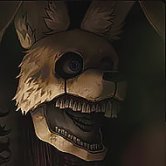
Horror fans may also want more scares than the toothy-faced creature that players keep bringing up, since that single jolt carries a lot of the dread. The tension comes mostly from the clock and the doubt in your own judgment rather than from jump scares.
Shift by Shift: How the Pressure Escalates
The game is built in shifts, and each shift leans on a particular kind of anomaly. Forced anomalies make sure the lesson of that shift actually appears, so you are not left to random chance. By shift 4 the lesson centers on creatures that do not breathe, which rewards players who watch bodies and not just dialogue.
Beginners get blindsided by the type they have not met yet. A visitor can sound perfect and still give themselves away through a detail you only notice once you know to look for it.
By the final shift the randomized visitor queues mean no two runs line up exactly. One player reported getting just one visitor wrong on the last night, which shows the difficulty is steep but fair once the patterns click. The checks stay tense because the faces keep changing.
Claymation Faces and PSX Grain in COST OF TRUST
The look borrows from old PlayStation horror, with grainy dithering and claymation-style animation that makes every face feel slightly wrong. Players repeatedly say that style adds to the eeriness. In a game about reading faces, a deliberately rough look hides just enough detail to keep you doubting.
The terminal sits in the foreground like a real piece of equipment, so the world never pulls you out of the operator’s chair. Nothing floats on screen that a booth worker would not actually see.
Audio sets the mood well, though one complaint comes up: players wish the music had more variety across shifts. A dread-filled loop works for a short session, but it can blur together if you retry several times in a row.
Replay Value and Who Belongs at the Booth
Randomized visitor queues give each attempt fresh faces and fresh dialogue, and the short runtime makes retries cheap. Many players report wanting one more try right after getting fired. Fans of Papers, Please will appreciate how a tiny rule set can still produce hard decisions.
The format also works for pairs. One person can read the dialogue aloud while the other studies the face, and arguing over whether to press A or R becomes part of the fun.
COST OF TRUST works because every visitor at the glass looks human until the one detail that does not fit. Keep your finger near Allow and Reject, learn what the Faceless get wrong in each shift, and remember that the terminal never gives you extra time to feel sorry for anyone.