















Window Seat
 (1 оценок, среднее: 5.00 из 5)
 Loading...
Similar Games










Description
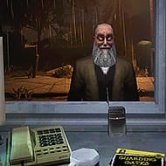
In Window Seat you start as one of the city’s noble Scrubbers, assigned to keep the elite’s glass spotless and told, very clearly, not to get involved in what lies behind it. That instruction matters because a Scrubber who cleans a window also sees into the room. The game turns that tension into a first-person detective puzzle about logical deduction and window cleaning.
| Genre | First-person detective puzzle |
| Players | Single-player |
| Setting | A grime-dark future choked by the Acrid Fog |
| Role | A Scrubber cleaning windows for the elite |
| Hook | Clean windows, solve murder |
Scrubbers, Sloane Industries, and the Acrid Fog
The city is built on a simple unfairness: pollution clings to the walls, smothers the streets, and leaves every window stained, so clean glass becomes a privilege of the elite. The Acrid Fog is more than backdrop here. It is the reason Scrubbers exist at all, and the tags of noir, conspiracy, and alternate history suggest a world that has been bent around that dirt.
Your orders are plain: keep their view spotless and keep your nose out of their business.
The warning to avoid the gaze of Sloane Industries hints that being seen looking is its own kind of risk. How that pressure plays out across the full game is not something the demo can show, but it frames every window as a place where curiosity could cost you.
Cleaning Glass to Gather Clues in Window Seat
Cleaning is the central verb. A stained pane hides a room, a wiped pane reveals it, and that makes the act of scrubbing double as the way you find evidence. Players who love hidden-object games will recognize the pleasure of spotting a small detail that was there all along.
The deduction part is what separates the game from a simple cleaning sim. Seeing a clue and understanding what it means are different steps, and the logic of who could have done what is where your own reasoning has to carry the case.
The page also carries tags for time management and time travel. Treat those as hints rather than confirmed rules, but they suggest that the clock, and perhaps the order in which you clean, shapes what you can learn.
The Seven-Minute Demo and What the Full Mystery Adds
The demo is a sample scenario that covers two floors and around seven minutes of in-game time. Early on, the first floor works as a lesson in the core loop, and once you reach the second floor you can judge how the clean-and-deduce rhythm holds up when there is more to track.
The full game promises many more floors, a wide cast of characters, and a complex, restructured mystery. That is a big jump from a two-floor slice, and it is the part worth watching.
Noir fans will want to pay attention to how the setting feels, since grime, fog, and wealth are doing much of the storytelling. Time-management players should look at how the minutes pass, because that clock is the part most likely to decide how tense the demo feels.
Where Window Seat Could Divide Detective Fans
Honesty about the unknowns helps here. A seven-minute demo cannot show whether deduction stays satisfying over a long case, and a mystery that is clever across two floors can still wobble across many. That is the biggest open question for anyone planning to follow the game.
Deduction fans also tend to split into two camps: those who want clean, fair logic that rewards careful note-taking, and those who want atmosphere first and puzzles second. Which camp Window Seat satisfies will probably come down to how the mystery is paced.
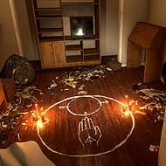
There is also a content note. The developers say the game depicts the aftermath of a murder scene, so expect that kind of imagery. It is pitched as noir and mystery rather than horror, which is a meaningful difference for players who avoid scares.
What to Know About Window Seat Before You Start
- What do you actually do in Window Seat? You play a Scrubber who cleans windows for the elite, notices what the clean glass reveals about the rooms behind it, and uses logical deduction to solve a murder. The first-person view keeps you at the window, so everything you learn comes from what you can see from where you are hanging.
- How long is the Window Seat demo? The demo spans two floors and about seven minutes of in-game time, which makes it a focused look at the core mechanics. It is a sample scenario, not a trimmed copy of the full case, so treat it as a taste of the Scrubber’s routine.
- Is Window Seat scary? It is not pitched as horror, but the developers note that it depicts the aftermath of a murder scene. The tone is closer to noir, with fog, grime, and Sloane Industries watching from the margins, so it suits players who like tension over jump scares.
Window Seat rests on one quiet tension: a Scrubber is paid to keep the glass spotless and keep their eyes down, while every wiped pane makes that harder to do. Whether you follow that rule or start pulling at what Sloane Industries wants hidden, the Acrid Fog outside and the murder inside will keep asking how much you are willing to see.