














Dominus Gladiatus
 (1 оценок, среднее: 5.00 из 5)
 Loading...
Similar Games








Description
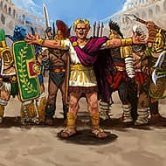
Dominus Gladiatus looks like a bloody arena brawler, but you never swing a sword. Your work happens before the gates open: deciding who to buy, who to train, who to rest, and what to put in their hands. Then you step back and watch Rome judge those decisions in the sand.
| Genre | Gladiator management simulator with auto-battler fights |
| Players | Single-player |
| Setting | Ancient Rome |
| Core Loop | Recruit, train, equip, and send gladiators to the arena |
| Structure | A 160-day tournament against rival Domini |
| Risk | Permanent death |
Running Your Ludus Like a Real Dominus
Everything in the game flows from the Ludus, your gladiator school. You expand it with new facilities, train your fighters, and develop their skills, all while a long tournament clock ticks forward. Six Domini compete in total, you choose one to lead, and then you face the other five one by one on the road to the grand final.
Each rival Dominus has their own strengths, methods, and ways of disrupting your Ludus. That detail changes how you plan, because the opposition is not a faceless bracket but a set of schemers with habits you can learn.
The tournament runs for 160 days, which is long enough that early decisions echo late. Players who enjoy long-term planning will feel at home, since a facility you expand in the first weeks may be the reason a roster is still standing near the end.
The Slave Market and the Search for Hidden Potential
New gladiators come from the slave market, a place of desperate men and future champions. You recruit from it, and the skill the game asks of you is spotting hidden potential in someone who looks ordinary today. Every recruit brings different strengths and weaknesses, so the cheapest face in the crowd can turn out to be the best purchase you make all season.
Beginners tend to buy the most impressive fighter they can afford and ignore everyone else. That works for a few fights, but a roster of one star is fragile, and the tournament punishes fragile rosters.
The premise is grim, and the game does not hide it. Players treated as stock, brutal arenas, and gore are all part of the picture, and some people will find that uncomfortable. If that is not for you, the tone will not soften as you go deeper.
Morale, Injuries, and Fatigue Before Every Fight
Three pressures run through the daily routine of a Ludus, and they decide who actually fights. The question you keep asking is who needs rest, who is ready, and who can be pushed further.
- Morale decides whether a gladiator walks into the arena confident or shaken.
- Injuries decide who has to sit out, however much you want them on the sand.
- Fatigue decides who can be pushed again and who is running on empty.
Early in the tournament, when every gladiator is still fresh, the temptation is to ride your strongest fighter every time. By the time the grand final comes into view, a roster you rotated carefully has more usable bodies than one you burned through, and that is a technique plenty of newcomers miss.
Min-maxers will enjoy treating these three numbers as a budget, spending rest where it buys the most. The real skill is accepting that sometimes the right call is to hold back a champion for a bigger fight later.
Weapons, Armor, and Role Fit in Dominus Gladiatus
Gear is not a prize you hand to your best fighter; it is a tool matched to a role. Weapons and armor are chosen to suit what a gladiator will do in the arena, and the description is blunt about the stakes: the right gear can mean the difference between victory and death.
The usual beginner error is giving the best equipment to the best fighter regardless of how that fighter actually works in a duel or a team battle. A role-first approach, where you ask what a gladiator is for before deciding what he carries, tends to hold up better.
Because fights come as both duels and team battles, the same fighter can look strong in one setting and exposed in another. Players who love theorycrafting loadouts will find plenty to chew on, while anyone who wants simple answers may feel the game asks for more thought than expected.
Why Auto-Battler Fights Divide Dominus Gladiatus Players
Once the fight begins, you watch. The auto-battler format means you cannot step in, so your influence is entirely the preparation you did before the gates opened. That is a clean fantasy for people who like being the manager, and a frustrating one for anyone who wanted to take over a sword.
The hardest moment in a game like this is the pause after you commit your roster and can only watch it play out. One mistake can cost a gladiator his life, and permanent death means you carry that loss forward. Roguelike fans will recognize the sting, and some players will find it too punishing for a management game.
The crowd adds another layer. Win its favor and it may turn the arena to your advantage, but lose it and the crowd becomes another opponent. Fans of Roman history will enjoy that spectacle matters as much as steel, and everyone else will learn quickly that a boring win is not always a safe one.
Dominus Gladiatus Questions Answered Before Your First Match
How long is a tournament in Dominus Gladiatus?
A full tournament runs for 160 days. Six Domini compete, you lead one of them, and you face the other five one by one until the grand final. The length means your early Ludus decisions, from facilities to who you recruit from the slave market, have time to pay off or backfire.
Can gladiators die permanently?
Yes, permanent death is part of the design, and one mistake can cost a gladiator his life. Managing morale, injuries, and fatigue is therefore about more than winning a single fight, because a tired or wounded fighter is the one most likely to be lost. Rotating your roster is the main way to limit the damage.
Do you control the fights directly?
No, combat is auto-battler style, so you watch duels and team battles play out after you have trained and equipped your gladiators. Your control lives in preparation: who fights, what they wear, and how rested they are. Winning the crowd can also swing a fight, so spectacle is part of the plan.
Dominus Gladiatus asks one steady question across 160 days: who deserves the next place in the arena, and who has already given enough? Keep your Ludus rested, read the crowd, and by the time the grand final arrives your surviving gladiators will show whether you were a true Dominus or just another name Rome forgot.