














Goodly Trials
 (1 оценок, среднее: 5.00 из 5)
 Loading...
Similar Games










Description
You stand at the shop table with a handful of coins, a wizard you cannot quite afford, and a rival who has just bid on the same squire. That tension sits at the center of Goodly Trials, a turn-based strategy game where every week of a twelve-week trek home is decided by what you buy, how you arm it, and where you place it in the line. The fighting happens on its own, but the choices that win it happen long before.
| Genre | Tactical auto battler with roguelite structure |
| Run length | Twelve weeks per solo journey |
| Roster | More than 60 playable units |
| Multiplayer seats | 2 to 8 players, with AI armies filling gaps |
| Difficulty | Three levels in solo play |
Twelve Weeks of Bargains in Goodly Trials
A solo journey opens with the choice of a leader, and everything afterward exists to bring that leader home alive. The calendar is the real clock: twelve weeks, each one a cycle of shopping, equipping, arranging, and fighting. Harder trials hand out new leaders and gear, which gives a finished run a reason to start another.
Shopping is where character shows. Knights, sell-swords, merchants, and wizards all turn up for hire, and the coins you carry never stretch as far as the shelf demands. Every purchase closes a door somewhere else, so a strong buy in week two can leave you short when a better unit appears in week five.
Beginners tend to spend like the journey is short. Early weeks feel forgiving, but the company has to grow into larger formations later, and a thin bench shows up at exactly the moment the fights stop being small skirmishes.
Reading the Line Before the Fight
Once combat starts you are a spectator, which makes the setup phase the real game. Range decides who can strike first, flanking punishes a line with open sides, and adjacency changes how neighbors support each other. The shape of the opposing line matters as much as your own, so the same company can look brilliant against one rival and exposed against another.
Auto battler veterans will recognize the satisfaction of watching a tidy formation fold a messy one. Tactics fans get something slightly different, because the planning here leans on geometry and trade-offs rather than moment-to-moment commands.
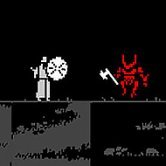
The tabletop feel comes through in the hand-drawn pixel presentation, and the full English voice track gives the roster more personality than a silent shop screen would. It is easy to grow attached to a unit that keeps winning you weeks.
Rolled Traits and the Units Nobody Expects to Matter
No two purchases are identical. Units and gear arrive with innate attributes and rolled traits, so two copies of the same unit can behave quite differently once armed. A plain hire with the right trait sometimes becomes the piece the whole line is built around.
With more than 60 units, a deep pool of unique gear, and several bosses to test a build, experimentation is the main long-term draw. Stats interact in ways that are not obvious at first, and reading trait lines before paying is a habit worth forming immediately.
The honest cost of that depth is churn. The creator has issued one or two balance patches a week, around 40 so far, with detailed notes inside the game. Players who enjoy a shifting meta will like the pace, while those who want a fixed rulebook may find it tiring.
Bidding, Leagues, and Grudges in Goodly Trials Multiplayer
Multiplayer turns the shop into a contest. Between 2 and 8 players join a tournament that can run in real time or asynchronously, and everyone shops in public, bidding against the table for the same stock. A bid you win is a unit someone else will never field.
After shopping you arrange your strategy in peace, then face each rival in a league. Friends can fill the seats, AI armies cover the empty ones, and spectators can wager on featured matches. The long memory of a good table is the best part, since everyone remembers who raised the price on your squire.
- Real-time lobbies for groups that want to play together
- Asynchronous tournaments for players on different schedules
- A ranked ladder where a rating follows every journey
Competitive players who enjoy reading rivals will find the bidding addictive, and solo players can skip the table without losing the core loop.
Factions, Bosses, and What the Roster Unlocks
Bone Host: one of the factions you earn by defeating bosses, and a good example of how unlocks reshape a company from the very first shop.
Below Born: the treasure-obsessed faction, a natural fit for players who like building a company around gear and gold.
Ranked: also gated behind bosses, this mode sets your army against companies built by ruthless AI and eventually other players, with rare rewards for climbing.
Progression: roughly 30 hours of items, characters, and cosmetics sit behind the unlocks, so the first twelve weeks are only the opening act.
Questions Players Ask About Goodly Trials
How do you unlock new factions and Ranked?
Defeating bosses is the key, and it opens Ranked modes, more units, and factions such as the Bone Host and the Below Born. Harder trials also unlock new leaders and gear, so replaying at higher difficulty feeds the same progression.
How long does a solo journey last?
A journey is twelve weeks of the shop, equip, formation, and battle cycle. Three difficulties let newcomers settle in before pushing for the leaders and gear that harder trials grant.
Do you need other players to enjoy it?
No, solo journeys cover the full roguelite structure, and multiplayer is optional. Players who do join can host real-time lobbies, fill seats with AI armies, and bid against rivals for the same inventory.
Goodly Trials rewards patience at the shop and nerve at the formation screen, whether you are shepherding a leader through twelve weeks or fighting a rival for a squire. With the Bone Host and Below Born waiting behind boss unlocks, the roster keeps offering new shapes to try, even if weekly balance patches will keep rewriting what counts as the best one.