














Parasomnia: No REM
 (1 оценок, среднее: 5.00 из 5)
 Loading...
Similar Games












Description
What happens when the line between being asleep and being awake stops holding? That’s the question Parasomnia: No REM keeps circling back to, and it never gives you a comfortable answer. You play as someone whose family vanished a decade ago, now pulled into sleepwalking episodes that drag the waking world and a distorted dream world into the same space.
The No REM State as the Game’s Central Mechanic
The No REM state is the mechanic everything in Parasomnia: No REM is built around. It’s presented as a real, scientifically grounded phenomenon where deep sleep and wakefulness overlap, and the game uses that overlap literally: rooms shift, objects behave differently, and the rules you learned in one reality stop applying the moment you cross into the other. It’s a smarter hook than a generic “it was all a dream” twist, because the game never lets you settle into either reality long enough to trust it.
What separates this from a lot of psychological horror is that the No REM state isn’t a one-time gimmick confined to a single sequence. It recurs throughout the game, and each time it does, the environment carries just enough familiar detail from the waking world to feel wrong rather than random. Players who’ve finished the demo tend to single this out as the game’s strongest idea.
Early in the game, the shifts are gentle enough that you might second-guess whether anything actually changed. That ambiguity is intentional, and it sets up how aggressively the later transitions hit once the game trusts you to notice the difference yourself.
Two Realities, One Fractured Memory
Parasomnia: No REM alternates between two interconnected worlds rather than treating the dream state as a side excursion. Progress in one reality often unlocks understanding, or literal access, in the other, which means backtracking isn’t padding here so much as a structural requirement. You’re not just solving puzzles; you’re reconstructing a timeline your own mind buried a decade ago.
This structure asks a lot of patience from players expecting a straight line from start to finish. Exploration-focused players tend to enjoy picking apart how the two realities mirror and distort each other, while players who just want forward momentum have flagged the backtracking as the demo’s slowest stretch.
The emotional core stays anchored in the disappearance that started all of this, and the game resists explaining it outright for a long stretch, letting environmental details do the talking instead.
Early Missteps Players Make in the Demo
- Treating the first dream-state shift as a scripted one-off instead of a recurring mechanic worth paying attention to.
- Rushing through environmental details that later function as puzzle clues once you’re back in the other reality.
- Assuming the No REM state always signals immediate danger, when early transitions are often safe to explore.
- Ignoring sound cues, which several players note telegraph a shift before it visually happens.
None of these mistakes are punishing in a traditional sense since this is a horror-adventure rather than a survival game with fail states, but they do cost players some of the atmosphere the pacing is built to deliver.
Mannequins and the Fear Parasomnia Builds Without Jump Scares
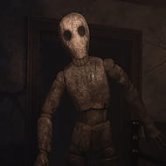
Mannequins are the game’s most talked-about recurring presence, and they work precisely because they don’t behave like conventional horror game threats. They’re still, they’re positioned with obvious intent, and the unease comes from wondering whether one has moved rather than from any single scripted scare. More than one player has said outright that the mannequins are the specific detail that stuck with them after finishing the demo.
This restraint fits the tone the whole game is going for. Parasomnia: No REM leans on dread built through environment and implication rather than loud scripted moments, which is a harder trick to pull off but tends to land better with players who’ve grown tired of predictable jump scares in the genre.
Puzzle Design Rooted in a Decade of Suppressed Memory
Puzzles here aren’t abstract mechanisms bolted onto a horror wrapper; they’re framed explicitly as fragmented memories the protagonist is piecing back together. That framing changes how solving them feels, since each solved puzzle doubles as a small narrative reveal rather than just a gate to the next room.
Story-driven players tend to get the most out of this design, because the puzzles reward attention to narrative detail over pure logic. Players purely after mechanical challenge have noted some of the solutions lean more on environmental storytelling than on difficulty, which won’t suit everyone equally.
By the time you reach the later memory fragments, the two realities you’ve been alternating between start informing each other directly, and solutions in one world increasingly depend on something you noticed in the other.
What the Parasomnia Community Keeps Arguing About
The most common point of debate is pacing, particularly in the demo’s middle stretch, where backtracking between realities can feel repetitive before the narrative payoff lands. It’s a fair criticism, and one the developers have acknowledged is a focus area going into the full release. Community discussion otherwise stays overwhelmingly positive, with most disagreement centered on how much slower exploration players are willing to tolerate for atmosphere.
Parasomnia: No REM earns its tension slowly, asking you to trust neither the room you’re standing in nor the version of events your own memory is handing you. The mannequins alone are reason enough for horror fans to pay attention, but it’s the way the game ties its two realities together around a decade-old disappearance that makes the demo worth finishing in one sitting.