








Not My Dad
 (1 оценок, среднее: 5.00 из 5)
 Loading...
Similar Games








Description
You finish brushing your teeth, flick off the bathroom light, and stop dead in the hallway because Dad’s door is open a crack that wasn’t there five minutes ago. Not My Dad drops you into one ordinary house after dark and asks you to get through your routine without giving Dad a reason to notice you’re paying attention.
| Genre | First-person psychological horror |
| Setting | A family house after dark |
| Core Loop | Complete nightly chores while avoiding Dad |
| Session Length | Short, single-sitting |
The Four Nightly Chores in Not My Dad
The structure is deceptively plain. You eat, you brush your teeth, you sit down to homework, and you get ready for bed, and each of those four tasks is a small window where you’re vulnerable because your attention is on the object in front of you instead of the room around you. Nothing forces you to rush, but the game rewards players who treat each chore like a checkpoint rather than a formality, glancing at doorways before committing to a sink or a desk.
What makes the loop tense instead of tedious is that the house never resets itself the same way twice within a session. A door you left open might be shut when you come back through, or a light might be on in a room you’re sure you turned off, and the game never explains which of those changes actually matter.
New players tend to power through the chore list as fast as possible, treating it like a checklist to clear. That instinct works against you, since slowing down to notice small changes is often the only warning you get before Dad shows up somewhere he shouldn’t be.
Reading Dad’s Behavior Before the Closet Opens
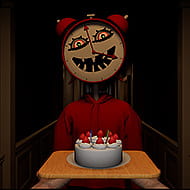
Dad doesn’t chase you in the way horror games have trained players to expect. He lingers. He stands in doorways a beat too long, or he’s suddenly present in a hallway you just walked through, and the game leans on that stillness far more than on jump scares. The closet in the upstairs bedroom is the clearest example of this design choice, since it’s the one fixed point in the house where something is either there or it isn’t, and checking it becomes a habit almost every player forms without being told to.
By the time you’ve reached the third chore on a given night, the closet door has usually shifted position at least once, and that small detail does more work than any loud sound cue could.
Streamers and let’s-players tend to fixate on this closet moment specifically, because it’s the one beat in Not My Dad that plays differently depending on whether you’ve been checking your surroundings or just grinding through tasks.
Early Mistakes Around Mom and the Kitchen
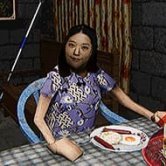
Mom’s presence in the house is easy to undervalue on a first playthrough. Players newer to the game often treat her as background dressing, someone to walk past on the way to the next chore, without registering that her position in the kitchen or living room is one more piece of information about whether tonight is a normal night. Missing that cue is the most common beginner mistake, and it’s one that clicks into place almost immediately on a second attempt.
The kitchen itself is deceptively risky too, since it’s the room most tied to the eating task, and it’s also where several players report the house feeling “off” first, before anything visibly changes.
This is where the game’s short runtime works in its favor. Because a full playthrough doesn’t take long, testing a theory about Mom’s placement or the kitchen’s lighting costs you a few minutes rather than an hour, which keeps the trial and error from feeling punishing.
Not My Dad and the Skin-Thief Theory
Ask around in comment sections and you’ll find a running theory that whatever has replaced Dad isn’t Dad at all, but something wearing him, moving through the family one person at a time. The game itself never states this outright, and that restraint is part of why the theory has legs; Not My Dad gives players just enough ambiguity to argue about what’s actually happening in this house.
It’s worth being honest that the demo-length scope leaves a lot of that theory unresolved. Some players find the lack of a firm answer frustrating rather than intriguing, and that’s a fair criticism of a game that leans so heavily on implication over explanation.
Whether you read Dad’s behavior as possession, imitation, or something else entirely, the ambiguity is doing real work, since a confirmed answer would flatten a lot of the tension the house currently holds.
Not My Dad Questions Players Search For
Is Not My Dad based on a true story?
No, Not My Dad is a fictional psychological horror scenario built around a single family and a single house; nothing in the game’s presentation claims any connection to a real event.
How do you avoid getting caught by Dad?
Stay alert to changes in the house between chores, particularly around the hallway closet and Mom’s position, and treat any unfamiliar detail as a reason to slow down rather than push forward.
Does Mom show up the same way every playthrough?
Her placement shifts enough between sessions that experienced players use her location as one of several environmental cues, rather than relying on her being in a fixed spot every time.
Not My Dad works because it trusts a closet door and a missing father to do more than a hallway full of jump scares ever could, and that restraint is exactly what keeps players coming back to argue about what’s really behind that door.