








Konbini Cleanup
 (1 оценок, среднее: 5.00 из 5)
 Loading...
Similar Games







Description
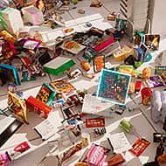
You pick up a lone can of green tea from the floor, turn toward the drinks fridge, and realize the shelf behind the glass is already packed with three different flavors in the wrong rows. That small moment of “wait, where does this actually go” is the whole heartbeat of Konbini Cleanup, a game that turns a wrecked Japanese convenience store into a slow, satisfying puzzle you solve one product at a time.
| Genre | Cozy Organizing Simulator |
| Platform | PC (Steam) |
| Core Mechanic | Picking up misplaced products and returning them to their correct shelf and price tag |
| Store Sections | 15+, including drinks, noodles, candy, and chips |
| Total Products | 2,928 |
Learning the Layout in Konbini Cleanup
The first ten minutes of the game feel deceptively simple. You grab whatever is closest, walk it to a shelf, and drop it under the matching price tag. There’s no countdown, no customer waiting behind you, and no penalty for wandering the wrong aisle twice. That absence of pressure is deliberate, and it’s the reason so many players describe the early store as meditative rather than dull. The trick beginners miss is that the layout isn’t random busywork — every section, from the drink fridge to the magazine stand, has a fixed internal logic, and learning that logic early saves a huge amount of backtracking later.
Casual organizers tend to clear sections in whatever order feels satisfying in the moment, drifting from the snack aisle to the drinks case without much of a plan. That’s a perfectly valid way to play, since nothing in Konbini Cleanup punishes an inefficient route through the store.
Where the layout actually matters is scale. With 2,928 individual products spread across the store, a section you cleared “well enough” tends to reveal three or four stray items once you circle back, which is why paying attention to shelf logic in the first sections pays off across the whole run.
Where Beginners Slow Themselves Down
The most common early mistake is carrying one item at a time across the entire store instead of clearing a local cluster first. Players new to the genre treat each pickup as its own errand, which turns a twenty-minute section into an hour of walking. The magazine stand is usually where this habit gets punished hardest, since its stacks are dense and easy to leave half-sorted.
Completionists run into a different trap: they try to fully finish one section before moving on, even when a handful of leftover items clearly belong somewhere they haven’t unlocked upgrades for yet. Early on, without extra inventory space or reach, that stubbornness just wastes time. It’s usually faster to let a section sit at ninety percent and come back once movement speed has improved.
Speed-sorters, meanwhile, tend to underuse the gatcha machine. It’s tempting to skip it and keep shelving, but the plushies it produces quietly boost sorting efficiency, and ignoring it for too long just means grinding through later sections at the same slow pace you started with.
Upgrades That Change the Pace of Konbini Cleanup
Upgrades are where the game quietly shifts from chore simulator to something closer to a flow state. More inventory space means fewer round trips. Longer reach means less crouching and repositioning around low shelves. A faster movement speed changes how the whole store feels to move through, especially once you’re clearing the candy and chip aisles, which pack a lot of small items into a tight footprint.
By the time you reach the noodle section, most players have unlocked at least one shelf-placement shortcut that lets them drop an item with a button press instead of manually aligning it. That single upgrade is often cited as the moment the game “clicks.”
The plushies from the gatcha machine add small passive bonuses on top of these core upgrades, which gives completionists a reason to keep feeding it even after the main store is mostly sorted.
The Sections Players Argue About
Not every part of the store lands the same way with everyone. The magazine stand is the section most often brought up in discussions as the one that overstays its welcome, since its stacks reset into a slightly different mess more often than other areas and can feel repetitive by the third or fourth pass. It’s a fair criticism, and one the community doesn’t shy away from even in an otherwise relaxed game.
What tends to win people back is the visual payoff. Watching a chaotic rack of onigiri settle into neat, price-tagged rows is the specific detail most players bring up when explaining why they kept playing past that one section.
There’s also debate about pacing near the end of the store, where the sheer number of remaining products can feel like a slog compared to the brisk early sections, even with every upgrade unlocked.
How many products do you actually sort in Konbini Cleanup?
The store contains 2,928 individual products spread across more than 15 sections, including drinks, noodles, candy, and chips. That number is the reason the sorting feels substantial rather than repetitive for the first several hours.
Is there a timer or pressure system in Konbini Cleanup?
No. The game runs entirely at your own pace, with no timers, no shift to complete, and no customer queue building up while you sort. You can leave a shelf half-finished and return whenever you like.
What do the gatcha machine plushies actually do?
The plushies collected from the gatcha machine grant small passive bonuses that stack with your main upgrades, gradually making sorting and shelving faster the more you collect.
None of this would matter without the specific texture of the store itself, and that’s what keeps players coming back to Konbini Cleanup even after the initial charm of a messy konbini wears off. Whether you’re chasing the last few onigiri into place or feeding the gatcha machine for one more plushie, the game keeps its promise of order arriving slowly, shelf by shelf, exactly on your own terms.