










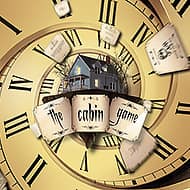
The Cabin Game
 (1 оценок, среднее: 5.00 из 5)
 Loading...
Similar Games









Description
The Cabin Game looks like a cozy card night gone spooky, but it plays like a survival negotiation where every card you place can turn on you. That gap between first impression and actual pressure is what catches most new groups off guard.
| Genre | Co-op Horror / Card Game |
| Players | 1–4 |
| Status | Early Access |
| Currency | Candy |
Escaping the Cabin One Card at a Time
There’s no fixed map waiting for you when a session of The Cabin Game starts. The rooms are laid out card by card as players build the cabin themselves, which means the space you’re trying to escape is one your own group constructed, mistakes included. Place a room carelessly early on and you’ll feel the consequence three rounds later when an Event forces you back through it.
That construction element changes how groups approach early turns. Rushing to expand the cabin gets you more rooms to search, but it also multiplies the number of places an Event can go wrong. Cautious players tend to build tight, defensible layouts; others sprawl outward chasing clues faster and accept the risk that comes with it.
The card-driven structure means no two sessions of The Cabin Game lay out the same way, even with the same group and the same starting hand composition.
Clues, the Graveyard, and Working Toward the Exit
Clues are the currency of actually escaping. Find them, place them correctly, and you edge closer to the exit; misplace one and it heads to the Graveyard, a discard-adjacent pile that some players use strategically once they understand how it interacts with room placement. There’s genuine community debate about whether Graveyard-bound clues can resurface once their matching room finally appears, and that ambiguity has fueled more forum threads than almost any other single mechanic.
Deduction matters more than raw searching. Groups that talk through which rooms are missing and which clues seem orphaned tend to close out escapes faster than groups that split up and search independently.
Early in the game, clue management feels almost optional. By the time a group has built out five or six rooms, tracking which clues belong where becomes the actual bottleneck.
The Visitor and Escalating Events
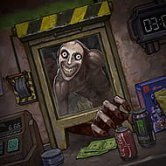
The Visitor is the closest thing The Cabin Game has to a recurring threat, and its appearances line up with specific Events rather than a constant patrol. Once the Visitor shows up for the first time, players report a noticeable shift in how cautiously the table plays every subsequent card — a psychological effect as much as a mechanical one.
Events themselves range from minor inconveniences to layout-altering disasters, and a handful have earned a reputation in the community for being close to unplayable without prior warning — the medicine-related Event in particular gets singled out for causing motion sickness during its visual effects, something the developers have acknowledged and are actively adjusting.
Building a Better Layout
Reading Events Before They Escalate
Spending Candy at The Boo Factory
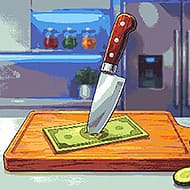
Candy accumulates as you play and gets spent at The Boo Factory on cosmetics, lobby pets, and tricks to use against friends mid-run — none of it gates progression, but it gives longer sessions something to work toward beyond the escape itself.
What Beginners Get Wrong
New groups to The Cabin Game consistently underestimate how much a single card can reshape the cabin. Placing rooms purely for clue access, without considering how an Event might later force everyone back through a bottleneck, is the most common early mistake. Competitive-minded players who try to solo-optimize their own path through the cabin often end up isolated when an Event hits, since several Events are built around the assumption that players are within reach of each other.
Cooperative players who communicate constantly tend to fare far better than groups that split the cabin and search in silence, since half the value in reading an Event comes from someone else spotting the detail you missed.
How do you avoid losing progress after a bad Event in The Cabin Game?
Build your cabin with redundancy in mind — multiple paths back to key rooms — since Events frequently force players through spaces they’d rather avoid, and a single-path layout leaves no fallback.
Can misplaced clues in the Graveyard still be recovered?
This is one of the most debated points in the community; consensus leans toward clues remaining tied to their intended room once it’s placed, but the interaction isn’t fully documented and groups still test it themselves.
The Cabin Game earns its early reputation on unpredictability — the layout you build, the Events that punish or reward it, and the Visitor’s timing all combine into something that rarely plays the same way twice. Whether you’re chasing a clean escape through the Graveyard’s clue trail or just trying to survive your first run-in with the Visitor, the cabin you walk into is always one your own table built.