






Toy Story Horror
 (1 оценок, среднее: 5.00 из 5)
 Loading...
Similar Games


Description
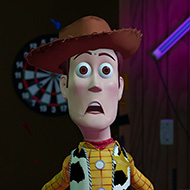
Toy Story Horror looks like a nostalgia trip through Andy’s room and plays like something closer to a stalking simulator, because the toy leading the group turns out to be the last thing you want cornering you in the dark.
Woody.EXE as the Threat, Not the Hero
The premise flips the source material’s most familiar face: Woody, normally the one keeping everyone else in line, becomes the pursuing threat once an outside entity named Respiro takes hold of him. Toy Story Horror leans hard into that inversion instead of treating it as a gimmick — Woody.EXE moves with none of the warmth players associate with the character, and that contrast is doing most of the horror’s actual work.
What makes the possession angle land is the motive underneath it. Respiro doesn’t just occupy Woody at random; the story leans on an existing jealousy toward Buzz Lightyear that was always present in the source material, just never pushed this far. Players familiar with the wider .EXE Saga recognize the pattern immediately — Respiro failed once before with a different host, and Woody was simply the next available grudge to exploit.
Rex, Mr. Potato Head, and Being the Toy Left Behind
Andy’s other toys aren’t just set dressing here. Rex, Mr. Potato Head, and Rocky each get pursued in turn, and the order in which they’re hunted down matters for anyone piecing together the game’s internal timeline. Some players approach Toy Story Horror purely for the scares, while lore-focused players spend just as much time cataloguing which toy vanishes first and why, since the game rarely spells it out directly.
RC Car shows up too, tied to a batteries-draining mechanic that nods at the original film’s toy-box logic — a small detail, but one that longtime fans of the franchise notice immediately and newer players tend to miss entirely on a first run.
Andy’s Room as a Hiding-and-Evading Space
The core loop is straightforward to describe and harder to execute: stay out of Woody.EXE’s line of sight, use the room’s furniture and shadows to break pursuit, and avoid backtracking through space he’s already checked. Andy’s room, small as it looks, has enough hiding spots — under the bed, behind the desk, inside the toy chest — that a careful player can lose him if they commit to a route instead of panicking mid-chase.
Beginners consistently make one mistake: they run in a straight line the moment Woody.EXE appears, which just gives him a clean read on their position. The players who last longest are the ones who break line of sight early and reroute rather than sprint for the exit.
By the time you’ve survived long enough to see the toy chest area properly, the tension shifts from “avoid Woody.EXE” to “avoid making noise near Woody.EXE,” which is a subtler and honestly scarier version of the same problem.
What the .EXE Saga Adds for Returning Players
Toy Story Horror doesn’t exist in isolation — it’s positioned within a larger continuity where Respiro’s failed possession of a different character in an earlier entry directly explains why Woody becomes the target this time. Players coming in cold can enjoy the chase mechanics without any of that context, but the ending hits differently once you know Respiro’s history of jumping between hosts.
The final scene deliberately leaves Woody.EXE conscious and vengeful rather than defeated, which the community has debated since release — some read it as a satisfying hook for a sequel, others find it an unsatisfying non-ending after a full survival run.
Community Vocabulary Worth Knowing
Chase phase refers to any stretch where Woody.EXE has active line of sight on the player, as opposed to the quieter exploration stretches between encounters — knowing when you’re actually in a chase phase versus just being watched changes how cautiously people move.
Toy Story Horror asks a simple question and then refuses to let you feel comfortable with the answer: what if the toy who always protected everyone else was the one you should have been running from all along, and Rocky just happened to find that out first.