














Stacktris
 (Пока оценок нет)
 Loading...
Similar Games








Description
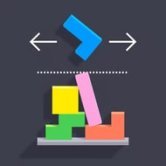
What happens to a tower when the piece you are holding will not stop spinning? Stacktris builds its entire challenge around that question, handing you a tetromino that rotates above a narrow platform, speeding up the longer you wait, and asking you to stop it, slide it into place and drop it without sending anything tumbling over the edge.
| Genre | Physics stacking puzzle |
| Platform | Browser, desktop and mobile |
| Desktop controls | Click and hold, A/D or arrows to move, release to drop |
| Upgrades | Slow Spin, High Friction, Wide Table |
| Fail state | Any piece falling off the platform |
Catching the Spin in Stacktris
Every turn begins with a piece rotating in the air. Clicking and holding locks the spin at the angle you choose, and that single moment decides most of the turn. Grab it too early and the piece sits at an awkward tilt, wait too long and the rotation becomes so fast that stopping on the right orientation feels like luck.
The trick most players discover after a few towers is to watch for the flat side rather than the full shape. A long I piece or a square O piece is easy to read, while S, Z and T shapes need a moment of calm before you commit.
Once the piece is held, A and D or the arrow keys slide it left and right over the tower. Releasing drops it, and gravity takes over from there.
Why Towers Collapse
Physics is the opponent here, not a timer. Pieces have weight, edges catch on each other and a block that looks stable can slowly tip once another one lands on top of it. The game ends as soon as anything falls, so a single careless drop wipes out a tower you spent minutes building.
Most collapses start with an overhang. Placing a piece so that half of it hangs over empty space looks clever until the next drop shifts the balance.
Keeping the centre of the tower solid and building outward only when the base can support it is the habit that separates short runs from tall ones. Puzzle fans who enjoy planning a few moves ahead tend to settle into this rhythm quickly.
Spending Coins on Slow Spin, High Friction and Wide Table
Coins earned from building go toward three upgrades, and each one fixes a different weakness. Slow Spin reduces how quickly the piece rotates, which makes catching the right angle far easier. High Friction stops pieces from sliding off each other so readily. Wide Table gives the tower a broader base to work with.
Which one to buy first is a common debate. Players who struggle with timing usually swear by Slow Spin, while those who lose towers to sliding blocks prefer High Friction, and Wide Table is the favourite of anyone who keeps running out of room at the bottom.
Hints are also available when you are unsure where a piece should go. Some players see them as training wheels, others as a sensible tool for long runs, and the game leaves that choice entirely to you.
Stacktris Habits That Build Taller Towers
Patience matters more than speed. Taking a breath before grabbing the piece, and another before releasing it, prevents the rushed drops that cause most early losses. There is no clock forcing you to hurry, so the only pressure is the spin itself.
It also helps to think about the next piece before the current one lands. Leaving a flat surface on top makes the following drop much easier, while a jagged top forces you into risky placements.
Players often describe a satisfying moment when a tall tower wobbles, settles and holds. That small pause before the blocks stop moving is the most tense second in the game, and surviving it never gets old.
Stacktris turns falling blocks into a patient balancing act where every catch of the spin, every slide across the tower and every coin spent on Slow Spin or Wide Table decides how high the next stack can go.