










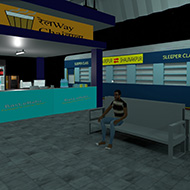
Railway Chai Wala
 (Пока оценок нет)
 Loading...
Similar Games





Description
In Railway Chai Wala you start behind a small stall with a kettle, a stack of cups, and a platform about to fill with passengers who won’t wait for a slow pour, and that starting condition shapes almost every decision that follows. There’s no story to walk through — just the stall, the tracks, and a queue already forming.
| Genre | Simulation, Idle |
| Setting | Railway Platform |
| Mode | Single Player |
Starting Railway Chai Wala Behind the Counter
The stall is your entire world at the outset — you’re fixed in place with a kettle and whatever stock you begin with, not wandering a station. Railway Chai Wala measures progress through how well you manage that one fixed spot rather than how far you travel.
New players tend to treat the stall like a passive backdrop, serving whoever shows up without urgency. That habit falls apart once the platform fills and several passengers wait on the same short window before their train leaves.
Reading the Platform Before the Next Train Pulls In
Because the setting is a railway platform, the trains set the real pace. Passengers cluster and thin out around arrivals, and reading that rhythm instead of serving whoever’s closest is the difference between a stall that keeps up and one that doesn’t. Managing it well comes down to a short list of things worth watching:
- How much stock is left before the next batch needs preparing
- How many passengers are waiting versus how many are about to arrive
- Whether the queue matches the time left before a train departs
- Which orders are quick to fill and which will slow the line down
Why Railway Chai Wala Rewards a Steady Pour
The idle side means the stall keeps producing and the platform keeps cycling passengers even without constant input, which suits players who like a steady background rhythm. Others who prefer hands-on management check in more often, nudging output to match a platform that never behaves quite the same way twice.
As a run continues, the crowd grows less predictable than it looked at the start, and that gradual shift is really the whole difficulty curve — not new obstacles, just the same loop asking for sharper timing.
The Kettle Never Really Stops Needing Attention
Nothing here escalates into a dramatic setpiece; the tension stays in the small gap between how fast you can pour and how fast the platform fills.
- How do you keep passengers from leaving unserved? Keeping the queue moving before a departure window closes matters more than serving one passenger perfectly, since a cup poured too late helps no one.
- Does the platform get busier over time? The flow of passengers grows less predictable the longer a run continues, giving the stall’s simple rhythm its real pressure.
- Can you manage the stall passively? The idle pacing lets it keep working with light attention, though staying fully passive can leave stock or timing mismatched.
Railway Chai Wala stays small in scope on purpose — one stall, one platform, one kettle — and that narrow focus is what makes its rhythm worth returning to.