






Terrible Lizards
 (1 оценок, среднее: 5.00 из 5)
 Loading...
Similar Games





Description
What happens when the thing chasing you through Dalton’s Dinos doesn’t stop at the edge of a broken walkway? That’s the question Terrible Lizards keeps putting in front of you, because outrunning a threat here means committing to a jump before you’re sure the landing is real.
| Genre | Horror, Parkour Platformer |
| Perspective | First-Person |
| Setting | Dalton’s Dinos, a defunct Route 66 attraction |
| Core Loop | Movement-based evasion, no combat |
Dalton’s Dinos as a Playground and a Trap
Terrible Lizards sets its entire runtime inside Dalton’s Dinos, a rundown dinosaur-themed roadside stop along Route 66 that looks abandoned right up until it very much isn’t. The attraction’s old fossil halls, animatronic displays, and exhibit tunnels double as the game’s obstacle course, and the level design leans hard on that dual identity — every room is simultaneously a museum piece and a platforming puzzle.
The Steam listing frames the goal plainly: move fast, navigate difficult terrain, and figure out what the park’s owners were actually digging up before the dinosaurs stopped being fossils. There’s no arsenal to fall back on. Every encounter with a monster is solved by outmaneuvering it, not fighting it, which puts the entire weight of survival on how well you’ve learned to move.
Community discussion around the demo keeps returning to how deliberately the studio paced that learning curve. According to comments from the developers, the first level in Terrible Lizards exists purely to teach basic traversal, the second gives players room to get comfortable with it, and only later levels introduce complications on top of a foundation you’ve already built.
Movement Systems: Run, Climb, Bounce, Slide
The parkour toolkit in Terrible Lizards includes running, jumping, climbing, wall running, bouncing off goo deposits, and sliding under obstacles, and the game expects you to chain these together under pressure rather than execute them in isolation during a calm moment. Goo bouncing is the standout addition introduced partway through the campaign — springy organic deposits scattered through later sections that launch you upward or across gaps you couldn’t otherwise clear, and misjudging the bounce angle is one of the more common ways a chase sequence falls apart.
Wall running shows up around the same stretch and asks for a different kind of commitment: sprinting into a wall at the right angle rather than hesitating at the edge of it. Combined, these two mechanics mark the point where Terrible Lizards stops feeling like a straightforward corridor runner and starts feeling like a genuine movement puzzle under time pressure.
Advanced players chain wall runs directly into goo bounces to skip sections of a chase entirely, a technique that community threads reference constantly when comparing personal best times through the demo’s second level.
The Hybrid and What Hunts You
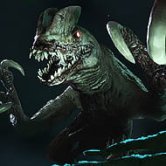
The most consistently mentioned threat from early coverage is the Hybrid, a Dilophosaurus-based creature with unsettling human facial features grafted onto its design. Sightings of the Hybrid are used sparingly by the level design — sometimes just a glimpse around a corner rather than a full chase — which is part of why players describe the pacing as curated instead of randomized. The team has said outright that Terrible Lizards isn’t going for the kind of horror where dread comes from wandering blindly; every beat, including when a hunt begins and ends, is intentionally placed.
That curated approach is also the most divisive point in early player feedback. Fans of tightly scripted horror appreciate knowing that a scare has a purpose, while players who prefer open-ended dread sometimes find the structure a little too controlled for their taste.
Collectibles and the Story Underneath the Chase
Scattered tapes, notes, and recordings throughout Dalton’s Dinos exist to answer the game’s real mystery: what the park’s staff found before the attraction shut down, and why something down there is still moving. Exploration-minded players will detour off the critical path specifically to track these down, even mid-chase, which sometimes turns a clean escape into a costly gamble.
Play Styles Terrible Lizards Rewards
Speed-focused players treat each level as a route to optimize, shaving seconds off goo-bounce chains once they’ve memorized a layout. Lore-focused players prioritize the tapes and notes even at the cost of a clean run. Newcomers to parkour-horror games in general tend to lean on the early levels’ generous checkpoints while their reflexes catch up to what later sections demand.
- What is the Hybrid in Terrible Lizards? It’s the primary recurring threat introduced in the game’s marketing, a Dilophosaurus-styled creature with human-like facial features that stalks the lower levels of Dalton’s Dinos.
- Does Terrible Lizards have any weapons or combat? No. The developers built the game specifically around evasion — running, climbing, and using terrain like goo deposits to escape rather than fight anything.
- How many levels does the Terrible Lizards demo include? The public demo covers portions of the first two levels, which are structured to teach core movement before layering in mechanics like wall running and goo bouncing.
Terrible Lizards works because Dalton’s Dinos never stops feeling like a real place even as it falls apart around you, and once the Hybrid enters a chase, every wall run and goo bounce you’ve practiced becomes the only thing standing between you and whatever this park was really built to hide.