









A Kingdom for Keflings
 (1 оценок, среднее: 5.00 из 5)
 Loading...
Similar Games







Description
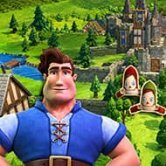
You pick up a Kefling, carry the tiny worker to a stand of trees, and set them down so they start chopping wood while you wander off to haul a block of stone yourself. That small routine is the whole engine of A Kingdom for Keflings, a medieval city builder where you play as a Giant and the Keflings handle most of the labor. Nothing in this game punishes a slow pace, which is why a single session can stretch from a quick half hour into an entire evening of building.
| Genre | City builder, simulation and strategy |
| Your role | A Giant helping the Keflings build a kingdom |
| Main goal | Finish the castle |
| Raw resources | Wood, wool, stone and magic crystals |
| Controls | Mouse |
| Typical session | About half an hour |
| Multiplayer | Network play over a LAN or the Internet |
Giant Duty: Carrying, Dropping and Assigning Keflings in A Kingdom for Keflings
The Giant is the only figure in the kingdom who can do everything. You can walk around and gather resources yourself, but Keflings can also be given roles: you pick one up and drop the worker in front of the area you want covered, whether that means mining, cutting down trees or delivering goods. Those simple tasks are all a Kefling really does, so the actual creation of new buildings and the management of everything gathered stays with you. Power-ups you uncover along the way raise your strength and speed, which makes your own hauling worth more as the kingdom grows.
Newcomers tend to send every Kefling to the forest first and then wonder why the stone pile never grows. Spread your workers across different resources before the first blueprint asks for anything more complicated.
You can also kick Keflings, and the game seems almost giddy about it, though it never punishes you for it and never rewards you either. Players who enjoy relaxed builders that keep handing out small chores will settle into the pick-up-and-drop rhythm quickly, while anyone hoping for a tense challenge should know that the only real conflict here is your own boot. That gentle tone is exactly what keeps the whole game calm, even when six different stockpiles are running low at once.
Blueprints, Workshops and the Long Road to the Castle
Progress is tied to blueprints. Each building shows the pieces it needs and how they are arranged, and once you place a single piece the positions of the rest are guided for you. The pieces themselves come from workshops, so early in the game your first job is always getting a workshop standing and supplied. Cottages follow, and they are what turn a handful of workers into something that feels like a real settlement.
The rough order of ambition looks like this, from humble beginnings to the finish line:
- Workshops for producing building pieces
- Cottages for growing the population
- The Town Hall
- Guild halls
- A cathedral
- Your very own castle
Blueprints, buildings and tasks keep unlocking as new structures go up, so once the Town Hall stands the road ahead opens noticeably. By the time you reach the castle you are keeping several production lines running at once, and finishing it brings a King or Queen to the Keflings, which is the closest thing the game has to a final goal. Builders who love watching a village grow into a proper kingdom get the most out of this stretch.
Resource Chains and Mayor Chores in A Kingdom for Keflings
Four raw resources feed everything in the kingdom, and learning to keep all four moving is the real puzzle of the game:
- Wood
- Wool
- Stone
- Magic crystals
Some buildings refine those raw materials into goods such as planks, brick and cloth, and those refined goods then appear in the cost of bigger blueprints. That layering is why fans compare the game to The Settlers, and it is where you learn to hunt for the bottleneck whenever one refined good runs out and a whole workshop goes quiet. Fixing the chain rather than simply sending more workers is the habit that separates a smooth kingdom from a stuttering one.
The Mayor also hands out quests that are really chores, and finishing them pays out hearts, tools and skills. Those rewards are worth taking seriously early on because they widen what your Giant can do, so completionists who like clearing every request will feel rewarded almost immediately.
What Divides Players: Mouse-Only Control, Stock Avatars and the Pull of the Sequel
This PC release has no controller support and relies entirely on the mouse, which catches out anyone expecting to lean back with a gamepad. Network play works over a LAN or over the Internet, but Internet sessions need one player to set up port forwarding and there is no matchmaking, so casual co-op takes some patience. Neither issue breaks the single-player kingdom, yet both come up whenever people talk about the game.
Your Giant is chosen from a handful of stock characters, and the sequel, A World of Keflings, is bigger and newer with quality of life improvements. Many players suggest starting there, while others stay with the original purely for nostalgia and its smaller scope. Two map packs also exist as extras for anyone who buys the full game and wants more to build.
Because this is an older game, downloading the trial version first is the sensible move to check that it runs well on your machine. The vague goal splits opinion too: some players love building toward the castle with zero pressure, while others feel the direction is too loose to hold their attention.
Questions Players Ask Before Building Their First Kefling Village
Can two people play A Kingdom for Keflings together?
Yes, the game supports network play over a LAN or over the Internet. For Internet play one of the two Giants has to set up port forwarding, and there is no matchmaking, so you will need to share connection details with your partner directly. If that sounds like too much setup, the single-player kingdom is a complete game on its own.
Does A Kingdom for Keflings support a controller?
No, this PC release uses the mouse for everything, from picking up Keflings to placing blueprint pieces. If controller comfort matters to you, the sequel is the better fit, since players report that it supports Steam Deck play much better.
Which should I play first, A Kingdom for Keflings or A World of Keflings?
The sequel is bigger, newer and includes quality of life improvements, so it suits players who want more content from the start. The original suits players who prefer the simpler climb from workshop to cottage to Town Hall, and its trial version lets you decide within a single session.
Every kingdom in A Kingdom for Keflings starts the same way, with a Giant, a few workers and a workshop waiting for its first blueprint pieces. What you do with the Mayor’s chores, the stockpiles of stone and the long road to the castle decides whether the game becomes a calm half hour or a long evening of building. If a quiet builder where the Keflings do the walking sounds right to you, the trial version is the simplest place to start.