















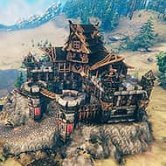
Valheim Base Defense
 (1 оценок, среднее: 5.00 из 5)
 Loading...
Similar Games











Description
You step out of the Longhouse at first light and find a Greydwarf Brute leaning on the Stakewall you raised the night before, with one corner of your Core Wood roof already lying in the dirt. That moment explains Valheim Base Defense better than any diagram: raids are not beaten by one clever wall but by layers that decide whether an attack is a nuisance or a weekend of repairs. The game puts a Hoe, a Pickaxe and a Workbench in your hands early, and almost every useful defense grows out of those three tools.
Why Valheim Base Defense Starts With Spawn Control
Raids are scripted events that fire while you live near your base. What they send depends on how far you have progressed, which biome you are standing in and how much you have built in one place. A lone hut in the Meadows can sit untouched for a long time, while a busy outpost with a Smelter, a Kiln and a row of chests becomes a far more reliable target. That is why defending early costs less than repairing later.
The cheapest layer is spawn prevention. Hostile creatures cannot spawn inside the area covered by a Workbench, so veterans scatter several of them around the edge of a yard and call it spawn-proofing. A single Workbench beside the front door protects that door and little else, which is the first thing newcomers misjudge. Coverage has to reach the places where you actually stand, sleep and store things.
Many beginners pour wood into thick walls first and then wonder why a Greydwarf appears right beside the door. A solo player who sleeps through the night gains the most from getting this layer right, because nobody is awake to notice a spawn inside the fence. Fix the spawns before you fix the walls.
Moats and Raised Earth That Raid Mobs Cannot Cross
Terrain is the strongest tool you own. Raid mobs look for the easiest way into a base, and when no route exists they attack whatever structure is closest. A ditch dug with the Hoe, or a wall of raised earth around the yard, removes the easy route entirely, and in current patches creatures simply cannot cross a properly cut trench. Players call this a moat even when no water is involved.
Depth and width decide whether a moat works. A shallow dent is something a Greydwarf steps across without noticing, while a deep cut with steep sides turns the same mob into a spectator. Raised earth works the same way from the other direction, and many builders combine both so the ground around the base reads as one long barrier.
There is a catch that players argue about constantly. Heavy terrain editing can make the game stutter, and a huge moat around a large base is not cheap to load, so some builders prefer a tighter ring and accept a smaller yard.
Stakewalls, Choke Points and One Controlled Door in Valheim Base Defense
The barebones setup that most forum veterans repeat has three parts: a ditch or raised earth to stop mobs, a line of Stakewall to break line of sight, and Workbench coverage to keep spawns out. Stakewalls look flimsy next to stone, but their job is not to hold. Their job is to hide you from archers and to slow the first rush so you can pick targets.
Once the outer ring is solid, leave exactly one way in. A single controlled entrance means every raid mob that finds a path ends up in the same place, and you can wait there with a Bow instead of chasing attackers around the property. Builders who enjoy layout puzzles tend to love this stage, because a good funnel feels like a trap you designed rather than a wall you stacked.
The funnel only works if mobs actually choose the door over chewing through a wall. Walk the perimeter after every upgrade and check that the open path really is the easiest path.
Raid Pressure After Each Boss Kill
Raids follow your progression, so every boss you defeat changes what can show up. A base that felt safe in the Meadows can feel thin once The Elder has fallen, because tougher raid events join the pool and the old plan was written for weaker attackers. Treat each boss milestone as a signal to walk the walls and re-check every layer.
That review is mostly about materials and gaps. Swap wood for stone where mobs reach, patch the corners that suffered last time, and extend spawn coverage if the base has grown. Defensive structures are limited in the base game, so most of the upgrade is about terrain and layout rather than new pieces.
The raid system itself is divisive. World modifiers let you turn raids down, and plenty of players say that removes the whole reason to fortify, while others argue a base should be a home first and a fortress second.
Trolls, Draugr and Skeletons: Who Breaks Which Layer
Trolls are the classic base wreckers. They hit hard enough to dismantle wooden pieces quickly, so the best answer is distance: keep them at the edge of the ditch and use a Bow before they reach anything you care about. A Troll standing against a raised earth wall is a Troll that is not eating your roof.
Draugr and Skeletons arrive in groups rather than as single heavy hitters, which makes a funnel and a broken line of sight far more valuable than raw wall thickness. Tamers have another option, since pet wolves can hold a choke point while you shoot, which helps a lot when you are playing alone.
Whatever the attacker is, repair as you go. A wall with one missing section becomes the new door, and the next raid will find it.
Late-Game Valheim Base Defense in the Mistlands and Ashlands
Everything above gets tested harder once you move into the Mistlands and Ashlands. Gjall float overhead, so a ditch means nothing against them and your roof becomes the front line. In the Ashlands, repeated explosive and fire attacks can wear down earth walls, and a worn wall gives other attackers an easier route toward your buildings.
The answer is more layers, not thicker ones. Combine terrain, spawn control, a roof you can repair quickly and a single defended entrance, and expect to patch something after every raid. Some players choose a naturally defensible site for a late-game base rather than fortifying a flat clearing.
Even then, the vanilla game has no true safe zone, which is why modded wards and shield generators keep coming up in community discussions. Whether that gap is a flaw or part of the survival pressure is something players still argue about.
Raid and Spawn Questions Answered
How do you stop raids in Valheim?
You cannot cancel them with buildings, because raid checks depend on your progression, your biome and how close you are to a base. What you can do is lower the frequency with world modifiers or make each raid harmless with layered defenses. Most players use a moat, a Stakewall line and Workbench coverage together.
Does a Workbench stop enemies from spawning near my walls?
Yes, hostile creatures cannot spawn inside the area a Workbench covers. Place several around the edge of the yard and near any door you use at night, because one Workbench only protects the ground around it. This is the cheapest defensive step in the game.
What is the best base defense against Trolls?
Keep distance with a deep ditch or raised earth and attack with a Bow from behind a Stakewall. Replace wood with stone on any section a Troll can reach, and avoid standing against a wall while one is nearby. Trolls break structures fast, so range matters more than thickness.
Valheim Base Defense comes down to small decisions repeated well: a Workbench at every corner, a ditch the Greydwarf Brutes cannot cross, a Stakewall that breaks line of sight, and one door where the first Troll ends up at the wrong end of your Bow. Build those layers in that order, revisit them after every boss you defeat, and the next raid will find a base with nothing easy to chew on.