















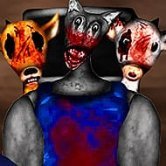
The Wolf and the Seven Little Goats (Analog Horror)
 (1 оценок, среднее: 5.00 из 5)
 Loading...
Similar Games






Description
The kids in The Wolf and the Seven Little Goats (Analog Horror) do not fall for the old voice trick, and that one change turns a bedtime story into a house you cannot leave. The retelling strips the Grimm tale down to a locked door, a Big Bad Wolf, and seven frightened goat kids with nowhere to run. It borrows the grain, static, and found-footage dread of analog horror, so it feels closer to a tape you were never meant to see than to a picture book.
From Grimm Fairy Tale to Analog Horror Tape
The original story is simple and cruel. A Mother Goat leaves her seven kids at home with a warning not to open the door, the wolf copies her voice and whitens his paw with flour, and six of the seven kids are swallowed. The youngest survives by hiding inside the grandfather clock, and the tale ends with stones in the wolf’s belly and a well. Almost every version keeps that skeleton, which is why the seven-kid count carries so much weight in the horror retelling.
The analog horror take keeps the cast but changes the rules. The kids recognize the wolf and refuse to open, so the Big Bad Wolf simply breaks in, and the goats scatter to hide behind furniture such as a couch or a crate. The footage is dressed in VHS static and distorted audio, which gives the story the look players call analog horror.
Many people meet this story first as a short video series, usually posted in numbered parts like Part 1 and Part 2, before they ever find a playable version. The Mother Goat’s fate is only implied on the tape, and that implication is more unsettling than any explanation would be.
Hiding and Timing in The Wolf and the Seven Little Goats (Analog Horror)
The playable version turns the tale into a stealth and survival loop. You hide, listen for the Big Bad Wolf, watch how he moves through the house, and try to keep as many goat kids alive as possible. Players who clear it with every kid still breathing describe the loop as simple but tense, and the visuals get more praise than the mechanics. Details vary a little between sites, so treat the exact layout of the house as something to learn on your first run.
A reliable round tends to follow the same order:
- Listen for the knock and the footsteps before you move anywhere
- Pick a hiding spot such as the couch or a crate that breaks the wolf’s line of sight
- Wait until his pattern carries him away, then shift to the next safe spot
Beginners usually panic in the first minute and burn their best hiding places before the Big Bad Wolf even reaches the kids. Early on, the house feels quiet and almost safe, but once the wolf is inside, every creaking floorboard matters. By the time only a few kids remain, patience is worth more than speed.
What Makes the Fairy Tale So Frightening
Children’s stories work as horror because the victims are small and the rules are simple. The door, the voice, and the warning are all things a child understands, so when the retelling breaks them, the fear lands instantly. Horror fans will recognize the shape of a story where doing everything right still might not be enough.
Sound carries most of the dread. The footage uses unsettling audio and distorted frames to hint at clues without explaining them, which is why lore hunters keep rewatching the numbered parts for details they missed. The knock at the door, followed by silence, is the moment most players say stays with them.
Puzzle fans get a smaller piece of the fun, since each hiding spot and room becomes a small problem about where the wolf is looking. The result is a story that rewards observation more than reflexes.
Where the Retelling Divides Players
Not everyone is comfortable seeing a children’s fable twisted this far. The tone is dark, the Big Bad Wolf kills goat kids on screen in the video series, and some players feel the horror reaches too far into material meant for the nursery. Others see that clash as the whole point of fairy-tale analog horror.
The playable versions also draw mixed reactions. Common complaints include:
- A short run that ends before the tension fully builds
- Simple stealth rules that some players call thin
- Different descriptions and layouts across sites, which makes it hard to know what to expect
Even so, fans of the video series usually forgive the roughness because the atmosphere carries the experience. It works best as a short, creepy session rather than a deep stealth system.
Questions Players Ask About The Wolf and the Seven Little Goats (Analog Horror)
Is it based on the real fairy tale?
Yes, it follows the Grimm story of the Mother Goat, the seven kids, and the Big Bad Wolf. The retelling drops the flour-whitened paw trick and replaces it with a forced break-in, but the structure of seven kids and one wolf stays intact.
How do you survive the Big Bad Wolf?
Learn his movement pattern first, then use hiding places like the couch and the crate to stay out of sight. Moving only when he walks away and keeping count of your goat kids is the safest way to finish a run with everyone alive.
Is it a video series or a playable game?
Both exist. The story first spread as numbered analog horror videos with VHS static and distorted audio, and playable versions followed that put you inside the house with the wolf. Players often watch the parts before trying the game for the full picture.
The Wolf and the Seven Little Goats (Analog Horror) works best when you treat every creak as a warning and every hiding spot as borrowed time. Between the Big Bad Wolf pacing the house, the Mother Goat’s absence, and the couch you hope will hold, the story takes a nursery tale and makes you listen for the knock.