














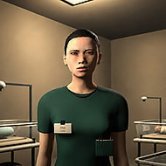
Postpartum
 (1 оценок, среднее: 5.00 из 5)
 Loading...
Similar Games











Description
You eat when the tray arrives, nurse your baby, pose for the first photos together, and at night you hand your baby to the nurse and try to sleep. Postpartum builds a first-person psychological horror game out of that routine, and the fear grows from how ordinary everything looks until one detail refuses to sit right.
| Genre | First-person psychological horror |
| Platform | PC (Windows) |
| Setting | A Korean postpartum care center, the sanhujoriwon |
| Length of stay | Five days |
| Perspective | A new mother with her newborn |
Five Days Inside the Sanhujoriwon in Postpartum
A sanhujoriwon is a Korean facility where new mothers and newborns stay together after childbirth to recover and receive care, and that setting carries the whole game. You check in with your baby after giving birth, and the stay is limited to five days. For readers who have never heard of this kind of facility, the setup is easy to follow: meals, feedings, photos and sleep make up the day, and nothing on that list sounds dangerous.
Five days is a tight window. Because each day follows the same pattern, any deviation reads loudly.
Horror fans who like slow-burn dread over chases will recognize the approach, since the fear is built through repetition rather than noise. Early in the stay you are learning the rhythm of meals, feedings and bedtime, and that baseline matters because the later days only land if you trust the routine you just memorized. Players who enjoy noticing small changes in a familiar space get the most from this stretch.
The Night Handover in Postpartum
Every night you give your baby to the nurse and try to sleep. That one action is the emotional center of the game: a new mother needs rest, and the care center asks her to let go of the one person she wants to keep close. Sleeping is the sensible choice and also the moment you lose sight of your baby.
Morning is when you find out what changed. Every handover carries that question with it.
The nurse is replaced overnight, and the new nurse always seems to be holding your baby. Once that swap happens, each bedtime handover means something different from the one before it. The question that circulates among horror fans is whether the person in your room at night is the same nurse who took your baby the evening before, and the setup is built so that you cannot settle it comfortably.
Reading the Room: What to Notice in Postpartum
Meals. Set mealtimes give each day a clock, and a clock is the easiest thing to break. When the tray arrives, treat it as a checkpoint: note who brings it and how the room looks, because the routine is your baseline for everything strange.
Feedings. Nursing your baby is the closest and quietest part of the day, which makes it a natural moment to register how your baby behaves. Anything that feels different at a feeding compared with the day before is information worth holding onto.
First photos. A photo is a fixed moment, so it is a good place to compare the room against what you remember. Players who like studying backgrounds will want to look twice, and anyone who wants combat or a chase should know that a game built on waiting and watching will feel slow. That is the honest trade-off: the dread is quiet, and some players call it thin while others call it the point.
Questions About Postpartum Before You Start
What is a sanhujoriwon in Postpartum?
It is the postpartum care center where the entire game takes place, a Korean facility where new mothers and newborns stay together to recover. You live inside its routine of meals, nursing and sleep, so understanding that daily rhythm is the first step to noticing what goes wrong.
How long does the stay last in Postpartum?
You spend five days at the care center, and each day follows the same shape: eating at set times, nursing your baby, taking photos together and handing your baby to the nurse at night. That repetition is what gives the later changes their weight.
Why does the nurse matter so much in Postpartum?
The nurse is replaced overnight, and the new nurse always seems to be holding your baby, which turns every bedtime handover into the central risk. Paying attention to how the nurse behaves around your baby is a good way to read what is happening in the room.
Postpartum takes a day that should feel safe, with its trays, feedings and photos, and makes the handover to the nurse the moment everything tilts. If a sanhujoriwon stay where your baby might be in the wrong arms sounds like your kind of dread, five days is a short and pointed way to find out how the care center answers.