














Loop Dungeon – Incremental
 (1 оценок, среднее: 5.00 из 5)
 Loading...
Similar Games











Description
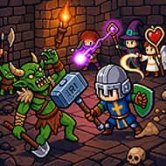
The heroes in Loop Dungeon – Incremental fight on their own, yet a party left alone never gets far, because skills and upgrades wait for your input. That gap between automatic combat and active decisions is what separates this short dungeon RPG from a fully hands-off idler. You lead a party through pixel-art levels, defeat what stands in your way, gather resources and spend them on hero and skill upgrades, then reset for prestige rewards. Everything is built around a finite campaign, and that shapes how every run plays.
| Genre | Incremental dungeon RPG |
| Mode | Single-player |
| Combat | Heroes fight automatically, skills are triggered by you |
| Progression | Hero upgrades, skill upgrades and a prestige reset |
| Campaign | Finite, with limited levels and upgrades |
| Visuals | Pixel-art dungeon levels |
How Loop Dungeon – Incremental Splits the Work Between Heroes and You
Combat resolves itself, but the decisions do not. Early in the game the loop is simple: your heroes clear a level, resources drop, and you choose where those resources go. The auto-battling only produces the numbers, while the spending is the actual game. Players who expect to leave the window open and walk away usually find that progress stalls.
Skills are the second half of the job. Heroes swing on their own, but activating skills at the right moment is your responsibility, and pressing them too late is one of the most common beginner mistakes. A skill held back for a boss fight that your party never reaches is wasted value.
The choice between hero upgrades and skill upgrades is where the tension lives. Sturdier heroes keep a run alive longer, while stronger skills end fights faster, and neither answer is correct for every level. Casual players with short sessions will like that each purchase changes the next few levels quickly.
Hero Roles, Skills and Upgrades Worth Prioritizing
Roles: you unlock heroes with different roles and abilities, and the party works best when those roles cover each other instead of stacking the same strength. Beginners often pour everything into the first hero they unlock, which creates a lopsided party that hits a wall at the first tougher level.
Skills: improving a hero’s skills matters as much as raw stats, because the real power shows when abilities are used together. Incremental number-chasers will enjoy planning which skills line up in the same moment.
Upgrades: spending resources evenly across the party smooths progress, while spending them unevenly makes some levels trivial and others brutal. When a level suddenly stops falling, the fix is almost always a neglected hero rather than a bigger investment in the strongest one.
Prestige Resets in Loop Dungeon – Incremental and What They Actually Give You
Prestige is the reset button that resets progress and grants rewards for later runs. Once the first wall appears and gains slow to a crawl, the reset stops feeling like a sacrifice and starts feeling like the next step. Later runs move faster because the rewards carry forward, so the early levels fall quickly the second time through.
The important detail is that prestige content is limited. There is no endlessly expanding endgame here, so a reset is a tool for finishing the campaign, not a doorway to infinite scaling. Players who accept that tend to enjoy the pacing far more.
Timing the reset is the one real skill. Resetting at the first opportunity wastes progress, while waiting far too long wastes time. The best moment is usually when upgrades stop paying off, and a careful player notices that before the party stops winning.
What the Mixed Reviews Say About the Finite Campaign
This is the honest part of the conversation. The store description once suggested endless dungeon loops and a never-ending climb, and the developer later corrected it and apologized for overstating the content. The real game is a short incremental RPG with limited levels, limited upgrades and a limited prestige system.
That mismatch explains why reviews are mixed. Players who wanted an endless idler felt misled, while players who wanted a compact campaign they could finish found what they were promised. Neither reaction is unreasonable, and knowing the correction in advance removes most of the disappointment.
Treat the game as a short campaign to complete rather than a hobby to maintain for months. Idle fans expecting a fully hands-off loop will be frustrated, but anyone who enjoys a few focused sessions of planning, upgrading and resetting will get what the game actually offers.
Questions Players Ask About Pacing and Progress
Is Loop Dungeon – Incremental an idle game?
Not in the hands-off sense. Heroes fight automatically, but skills and upgrades still need your input, so a party left alone stalls. Think of it as an incremental RPG with automatic combat rather than a game that plays itself.
Does the campaign ever become endless?
No. The levels, upgrades and prestige content are all limited, and the campaign is designed to be finished. Expect a short run through the dungeon levels rather than a loop that keeps scaling forever.
What does prestige actually do?
Prestige resets your progress and grants rewards that help later runs. You give up hero levels and upgrades in exchange for faster early levels the next time through. The system is limited, so it supports the finite campaign instead of extending it indefinitely.
Loop Dungeon – Incremental is at its best when you treat it as a compact incremental RPG: build a balanced party of heroes, time your skills carefully, and reset for prestige only when upgrades stop paying off. The satisfaction comes from clearing the final level with a party you shaped yourself, not from chasing a number that never ends.