




Moo Who?
 (1 оценок, среднее: 5.00 из 5)
 Loading...
Similar Games






Description
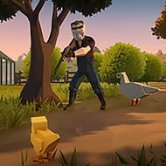
You’re crouched in a pen with a dozen other cows, all of you swaying slightly the way NPCs do, when the timer for the next check drops to zero and your mic goes hot. Somewhere across the map, a hunter is watching this exact herd, shotgun raised, waiting for one animal to freeze half a second too long. That’s the entire tension of Moo Who?, a multiplayer party game where you either fake an animal noise convincingly enough to survive, or you don’t.
| Genre | Action, Casual, Indie |
| Platform | PC (Steam) |
| Players | 2–8 online |
| Price | $6.99 |
Blending Into the Herd in Moo Who?
Every match splits players into two roles: animal players who hide among a herd of NPCs, and hunters who are trying to pick the real people out of the crowd. If you’re assigned a cow, you moo. Chicken, you cluck. Pig, oink. Sheep, baa. It sounds like a party joke for the first round, and honestly it kind of is, but the moment a hunter walks close and stares directly at you, the joke turns into pressure fast.
The NPCs around you make the same sounds on a loop, so a lazy fake blends in just fine from a distance. Up close is a different story. Hunters learn to listen for timing gaps, for a moo that comes in a beat late, for a cluck that’s too clean and too evenly spaced compared to the scruffier NPC pattern nearby.
New players almost always give themselves away the same way: they go quiet the second a hunter gets near, thinking stillness reads as safety. It doesn’t. Silence during a check window is the single fastest way to get shot.
The Sound-Pressure Moment That Breaks New Players
Moo Who? runs on a repeating beat called the sound-pressure moment. A short window opens, and every animal on the map has to vocalize before it closes. Miss it, and buzzing flies start circling your character, marking your exact position for any hunter nearby.
This is the mechanic that separates rounds you win from rounds you don’t. Early in a match, hunters are still scanning wide, so a missed sound check might go unnoticed. By the time you reach the third or fourth pressure moment, though, the map has thinned out, hunters are camping choke points, and flies over your head are basically a flare.
- Timing your sound a beat after the NPCs near you, not before
- Moving slightly during the check instead of freezing like a statue
- Staying near NPCs of your same species rather than isolating yourself
Reading a Hunter Before the Shotgun Comes Up
Hunters only get so many shots before they’ve burned their advantage, and every wasted round on an NPC brings the animal players closer to winning by default. Good hunters walk slow, angle their camera to catch multiple animals in frame, and wait for a hesitation instead of committing to the first suspicious moo they hear. Players who main hunter tend to develop a rhythm for this, almost like they’re auditioning suspects instead of just shooting on instinct.
Watching for the flies is the obvious tell, but experienced hunters also pay attention to which animals repeat their sound in an identical loop every time, since real NPCs vary their timing slightly and players under pressure often don’t.
Why Moo Who? Rewards Quiet Confidence
The players who do best aren’t the loudest or the funniest performers, they’re the ones who treat every sound check like a small decision instead of a joke. Casual groups tend to play for the achievement chase, going for badges like Early Bird or Trigger Happy, while more competitive lobbies obsess over Untouchable, surviving an entire round without ever drawing hunter attention.
It’s worth saying plainly: not every round feels fair, and that’s part of why opinion on Moo Who? currently sits closer to mixed than universally positive. Larger lobbies can turn into a hunter picking off the same unlucky player twice before anyone gets a real read on the room, and there’s no way to appeal a bad shotgun guess. That randomness is either the charm or the flaw depending on who you ask.
What happens if you miss a sound-pressure moment entirely?
Flies appear around your character and stay visible until the next successful check, which makes you an easy target for any hunter scanning the area. It doesn’t eliminate you outright, but it removes whatever cover you had built up until that point.
Can hunters tell animal players apart from NPCs by movement alone?
To an extent. NPCs shuffle in small predictable loops, while real players tend to drift, reposition, or hesitate near hunters, which experienced players learn to smooth out over time.
Is it better to learn hunter or animal first?
Most players pick up animal play faster since it only demands good timing, while hunting rewards pattern recognition that usually takes a few full matches to develop.
Whether you’re chasing Master of Disguise across a dozen matches or just trying to survive one round without the flies finding you, Moo Who? keeps coming back to the same simple test: can you sound believable when it actually counts.